Irrigation, Thistles, and Taking Initiative
#bfrdpwy #aginternship #RightRisk
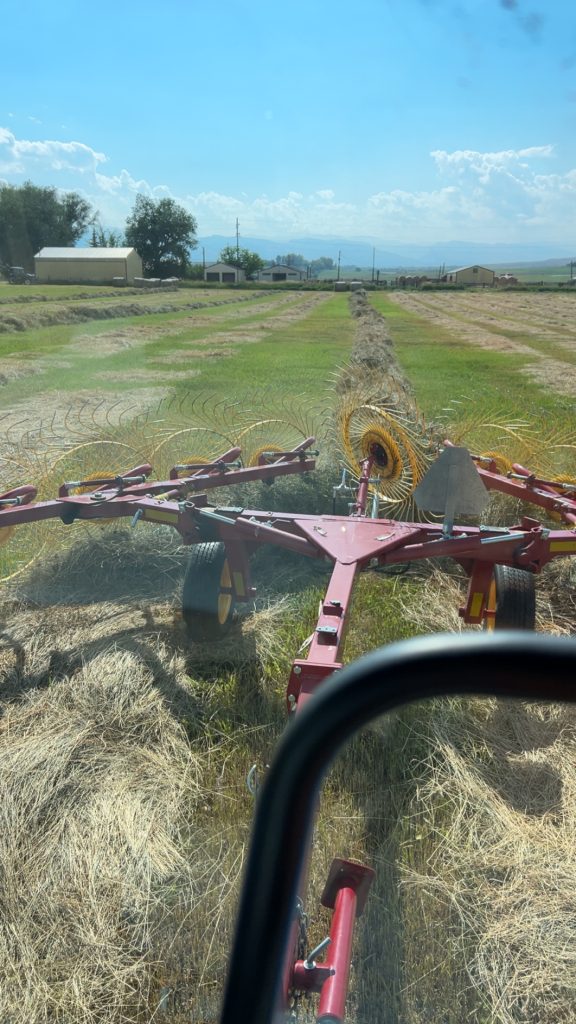
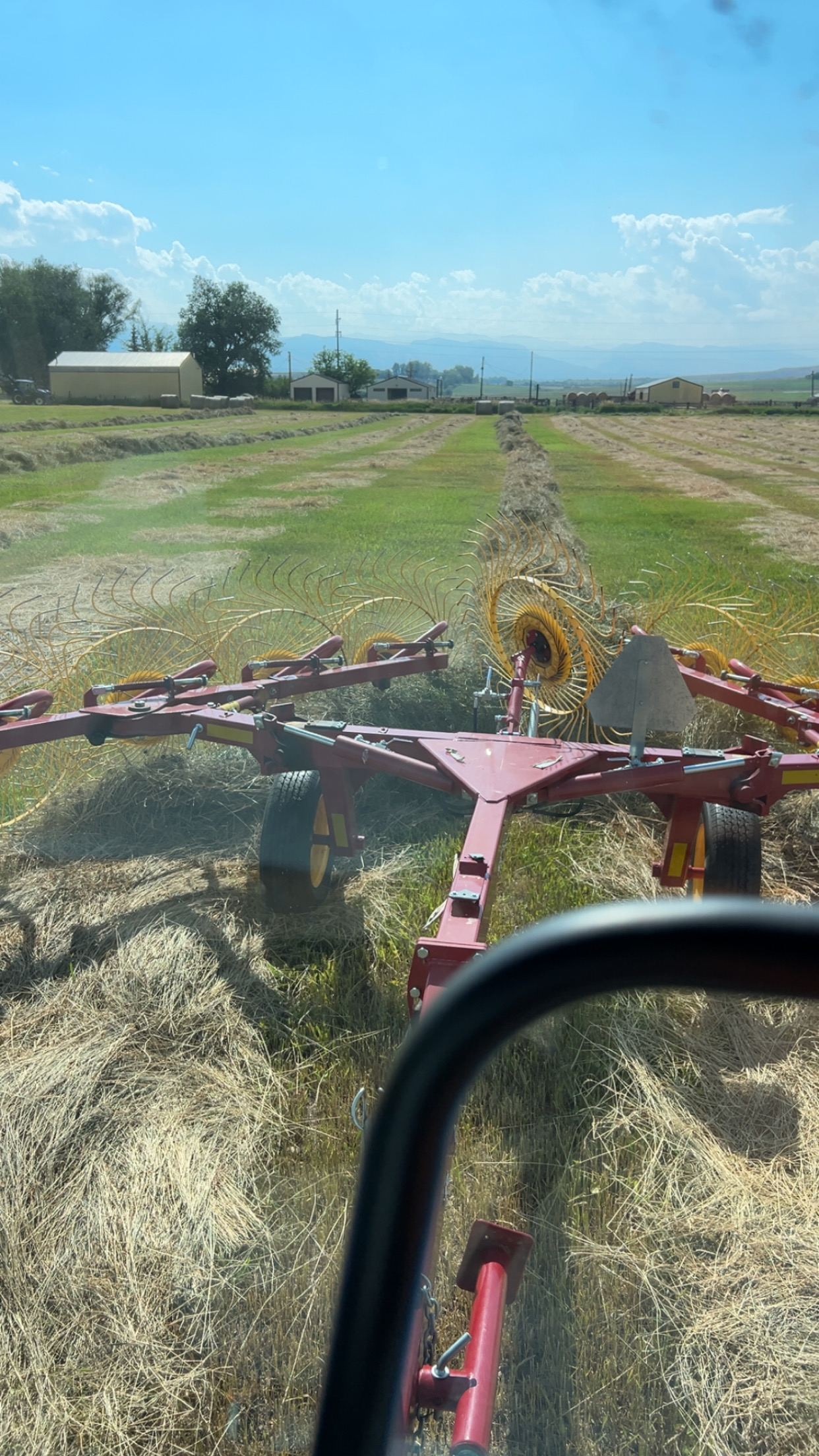
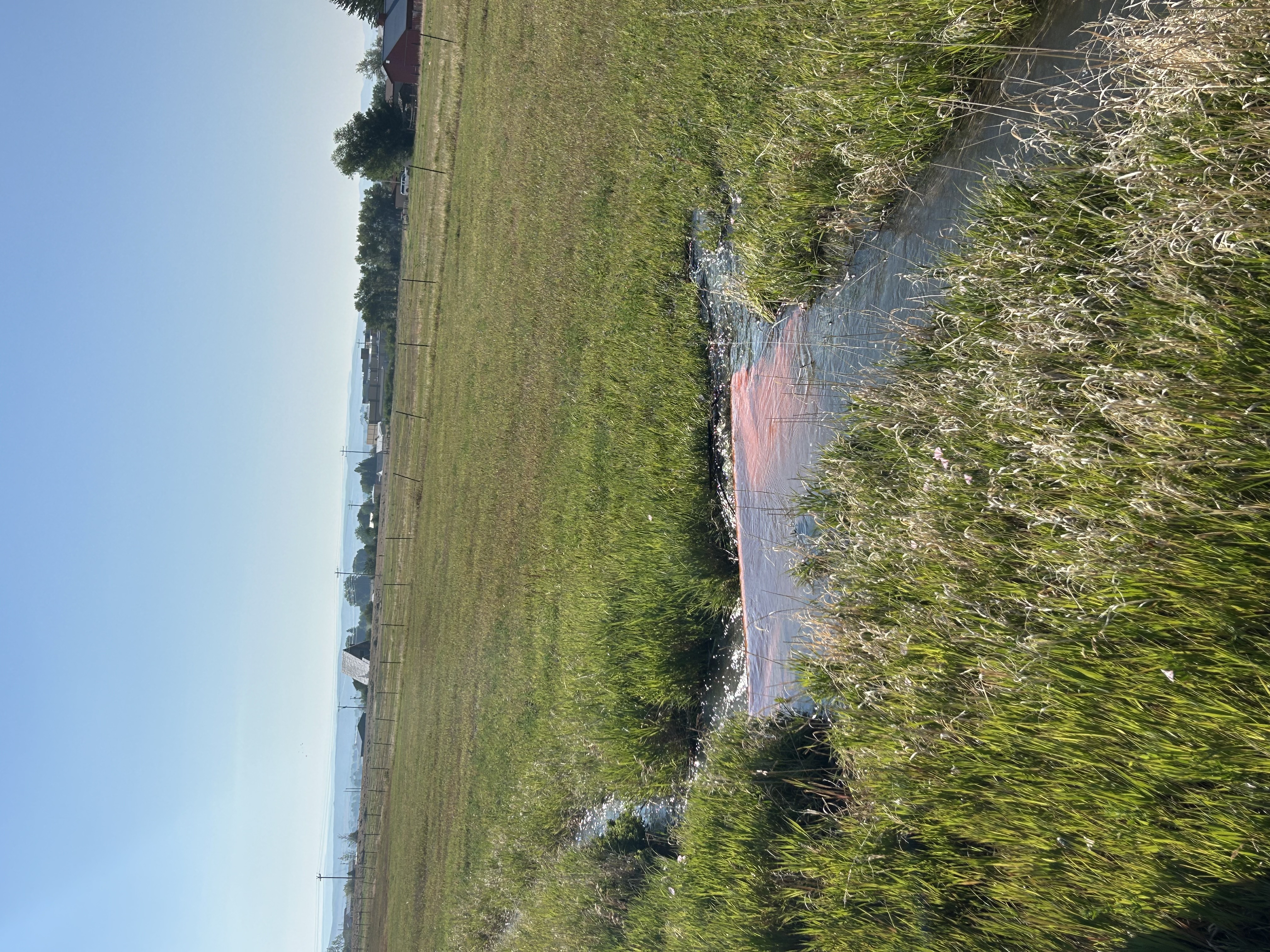
This week we finished cutting and baling our lease property down the road. We concluded that the field was just watered so thoroughly that the wet spots in the west side of the field were just residual from the irrigation. During this process, my hosts were raking and baling at the other field and I have been left at the main property to do the majority of the irrigating and weed pulling. All of the thistle plants are beginning to seed and we have made it a priority to mitigate the new growth in order to preserve the hay fields. Additionally, I learned how to cut and set up new tarp dams for irrigating. We also got the water back on our lease property up the hill so we have been able to leapfrog it into three ditches to utilize all of the runoff effectively.
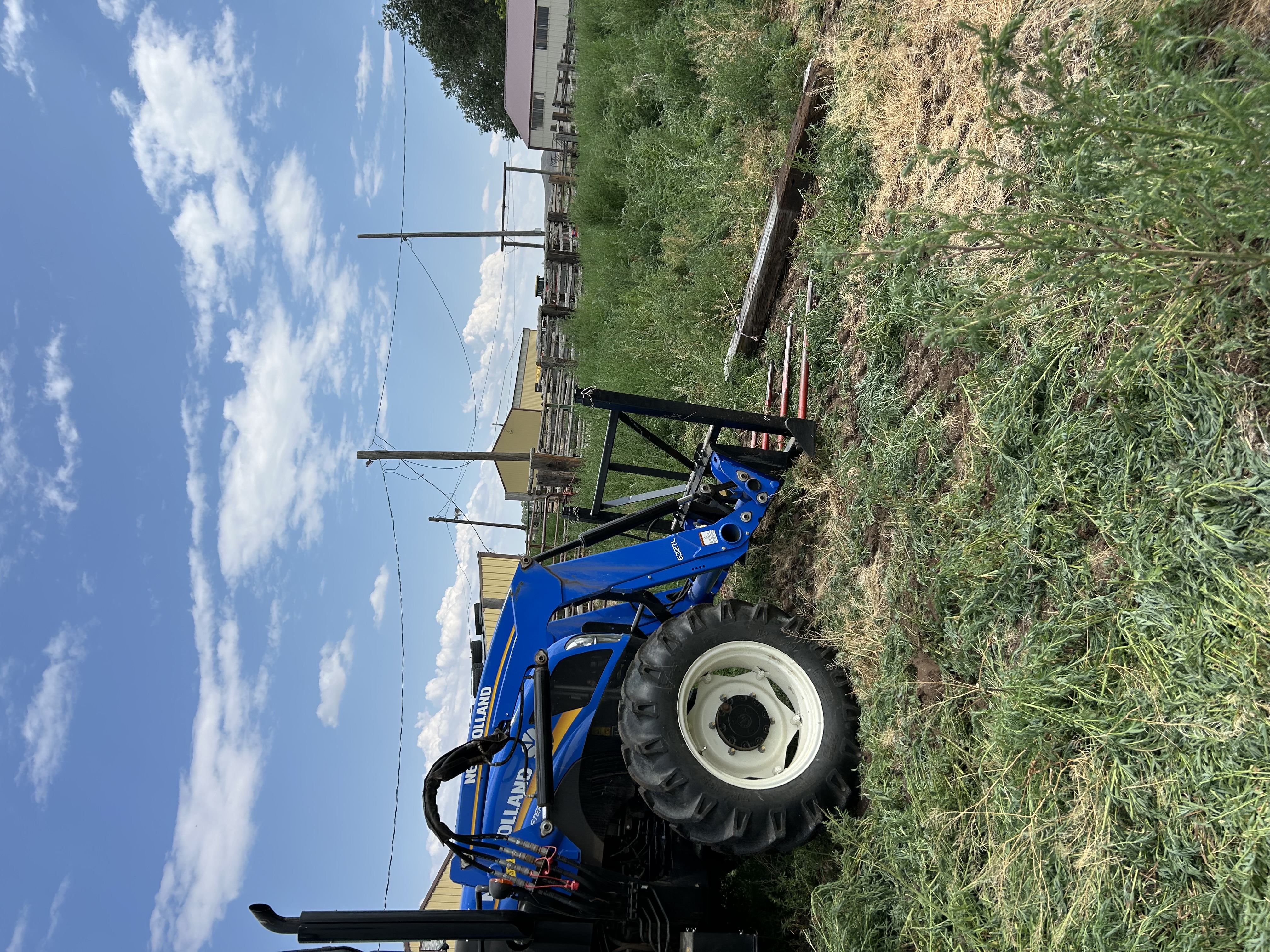
At our lease property, there is a sort of makeshift corral to stack hay. Originally, the corrals used to be used for cattle doctoring and branding. Currently, horses are held in the corrals and the hay is being stored in a separate part. However, the fences are still set up for cattle. This makes storing hay and maneuvering a tractor difficult because the corrals are too narrow. Mixed species operations are difficult because the setup for the previous cattle operation is different from the curing horse and hay operation. Due to these issues, we did some fence and panel deconstruction, essentially rearranging the furniture and opening up the space to allow for more hay. Personally, I think that all of the deconstructive efforts should have been made in advance to avoid doing it while we have hay waiting to be put away.
As I stated previously, we have made weeding a priority. However, there isn’t a clear cut “great” way to do it. Using a backpack with weed spray in 97 degree heat risks heat stroke and other difficulties. Weed spray also doesn’t kill the plant immediately and they can still come to seed even after being sprayed. Hand pulling is tedious and strains your back, along with the fact that there are simply too many groves of thistle to hand pull. Recently, we ordered a scythe. Hopefully that will be more efficient. We also have dabbled in the idea of having goats come onto the property in fenced sections to eat the thistle. My question is, what is the best way to get rid of the thistle and prevent them from seeding and repopulating further?
This week, I have had a lot of time by myself on the ranch to handle all of the irrigating and the other tasks. This has taught me to be a self-starter and to take my knowledge that I have learned and apply it. I’ve been able to look around and see what needs to be completed in addition to my original task list. I think this is one of the life lessons that will be the most prolific and significant in my life after I leave the ranch. It is one thing to do your tasks under supervision. It is another to do that plus the extra of your own accord.
Submitted by: Kaylee Pearce
Edits by: GrowinG Internship Team