Tools, Tradeoffs, and Practical Ranch Management
#bfrdpwy #aginternship #RightRisk
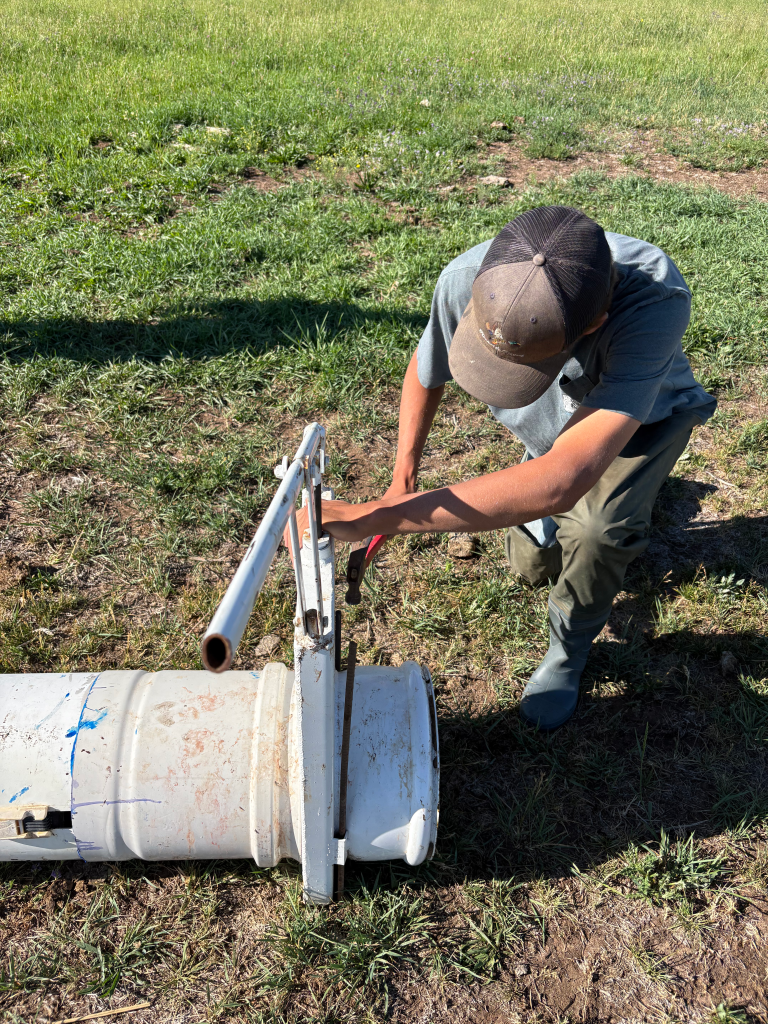
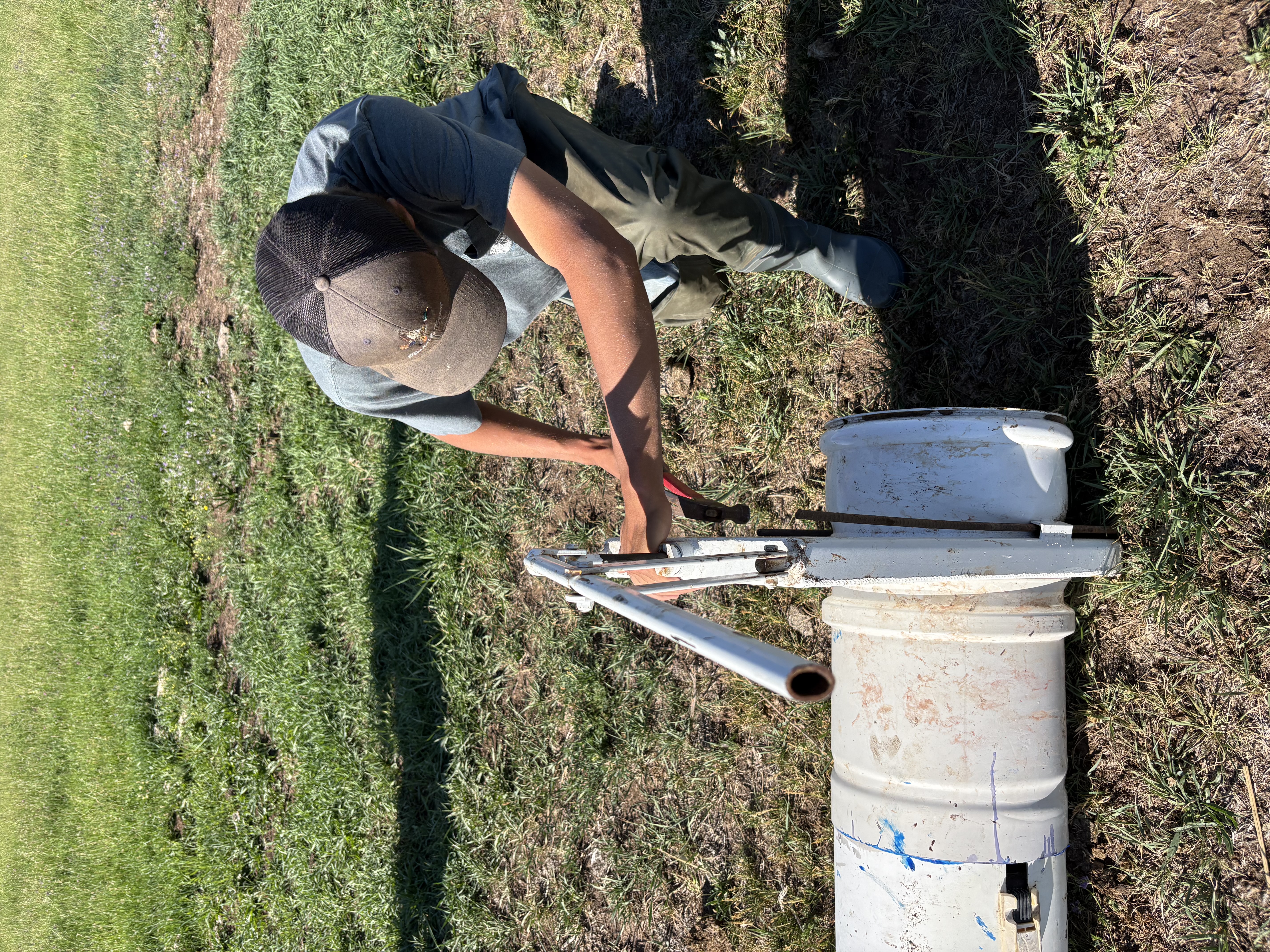
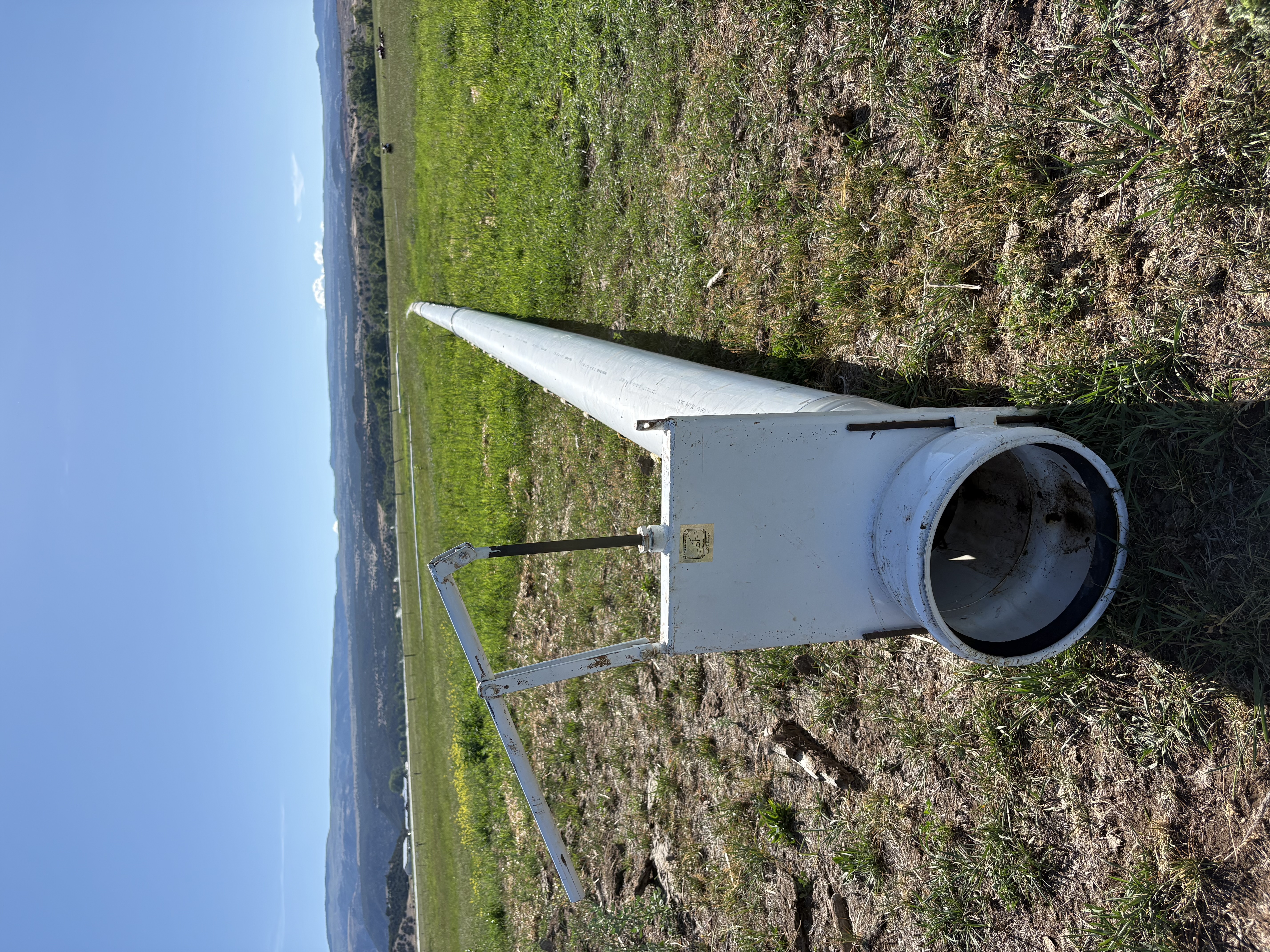
This week was filled with many activities and tasks. I am going to focus on flood irrigating again, but with gated pipes as opposed to tarp dams. Irrigating with gated pipe is another form of flood irrigation that my host ranch uses to grow forage to graze their livestock on. Through the process of putting together gated pipe, it has shown me that it has moments of struggle and frustration like anything else. As somebody who didn’t even know what gated pipe was before I arrived at the ranch, it gave me the opportunity to look for some benefits and drawbacks to gated pipe with a fresh set of eyes.
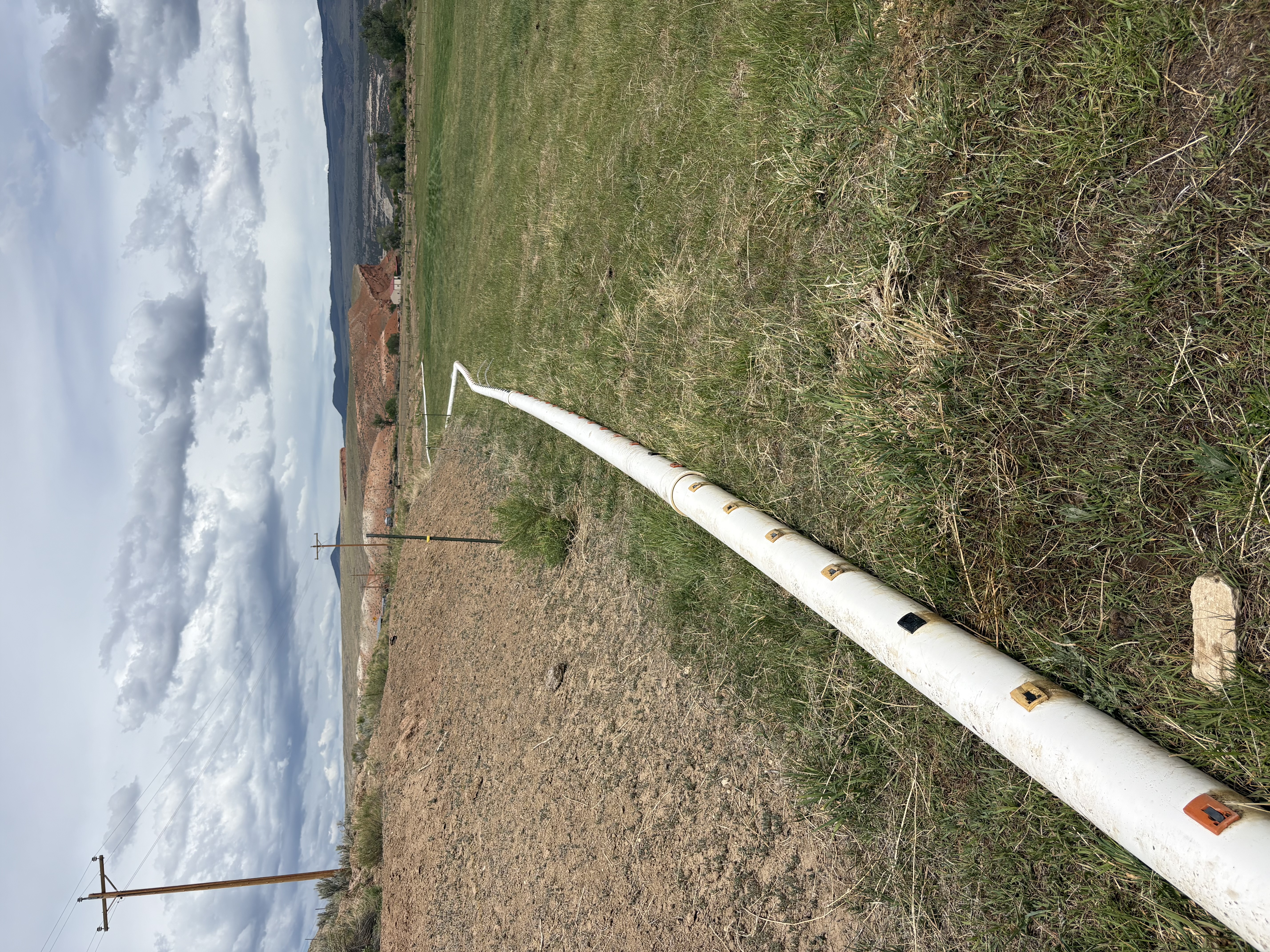
In my experience so far with gated pipe, I noticed that it seems to be more limited to a certain landscape and works the best with areas that have a more uniform slope. This is different in comparison to my experience irrigating with tarp dams because it seems if you cut ditches in the right spots, tarps can irrigate lands with much more inconsistent terrain more effectively, and in some situations hit dry spots that gated pipe would have otherwise not been able to reach.
A benefit that I found with gated pipe is that once it is put together, the act of irrigating lands is much less labor intensive, which is something to consider as you can use that time saved to complete other tasks on the ranch. After irrigating with both tarp dams and gated pipe, I have learned that they each have their own place in the world of irrigating, and there isn’t one that is better than the other, just different tools to be applied to different situations.
An important lesson I learned this week was about application, but in a broader scope than just different forms of flood irrigating. Getting the opportunity to work on a ranch in the Bighorn Basin has opened my eyes to the fact that almost everyone in the ranching community does things a little different from operation to operation. Although in a similar area, these ranchers are utilizing different grounds, have different resources and have been taught different things, leading to differences in the way they operate. This to me is the beauty of working in agriculture.
There is no handbook that tells you exactly how to do something, instead you have a goal and how you get to that goal is up to you and your discretion. In this we need to be reminded that to some extent, there isn’t a right or wrong way to complete a goal, and just because somebody brings a different perspective doesn’t mean it’s wrong. As a young person in agriculture, I believe this lesson of application is fundamental to success.
As I go from operation to operation there will be opportunities to compare the similarities and differences between those places that I work, and this will be important to take advantage of. Evaluating these different techniques to consider their application on other working operations is extremely important. If I can notice the potential areas of improvement on an operation because I experienced its success elsewhere could equip me with another tool to someday manage a farm or ranch if I am fortunate enough.
Overall, application depends on so many factors, and that’s why no farm or ranch is exactly like the other. Our ability as new and young people in agriculture to apply what we have seen is important for many reasons, and recognizing why something wouldn’t work is just as important as recognizing why something could work and be an improvement.
| Submitted by: Jonah Verhoef Edits by: GrowinG Internship Team |