Bulls, Barbed Wire, and Better Judgment
#bfrdpwy #aginternship #RightRisk
With this being my last week, I was fortunate to be part of my boss’s final branding. We finished branding the heifers that did not take to the AI and were live serviced. Since this group was smaller, we were able to finish fairly quickly. It was nice to see everyone one last time that I had the opportunity to meet during my internship. With fewer calves to work, I was also taught how to castrate the calves on my own.
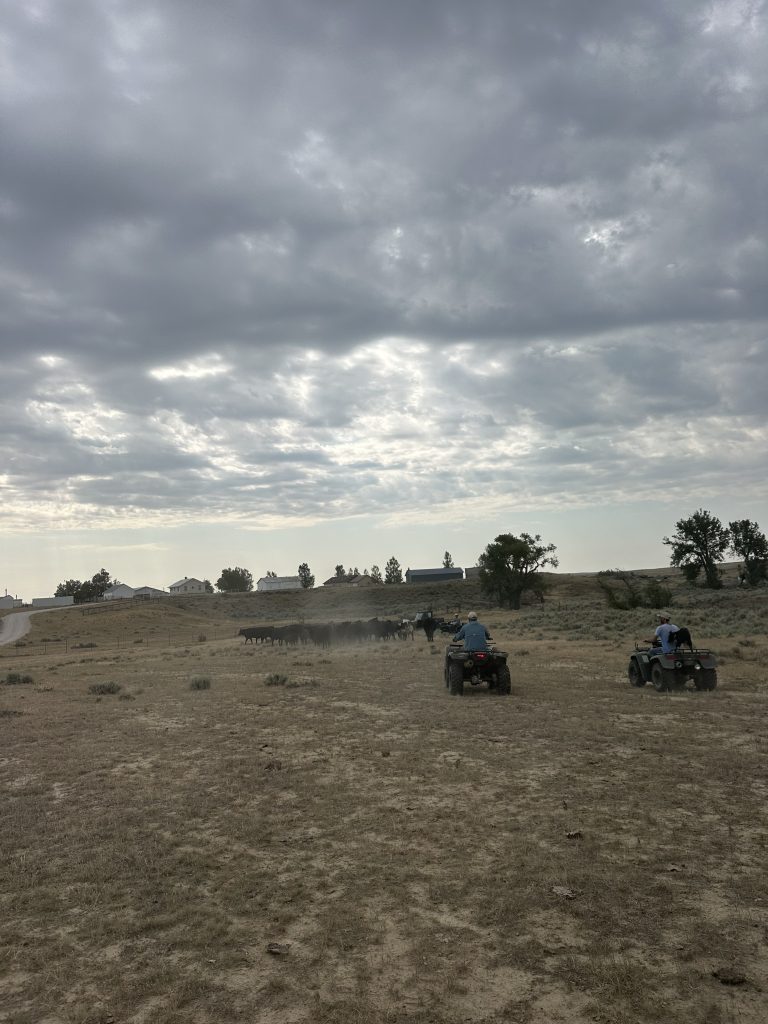
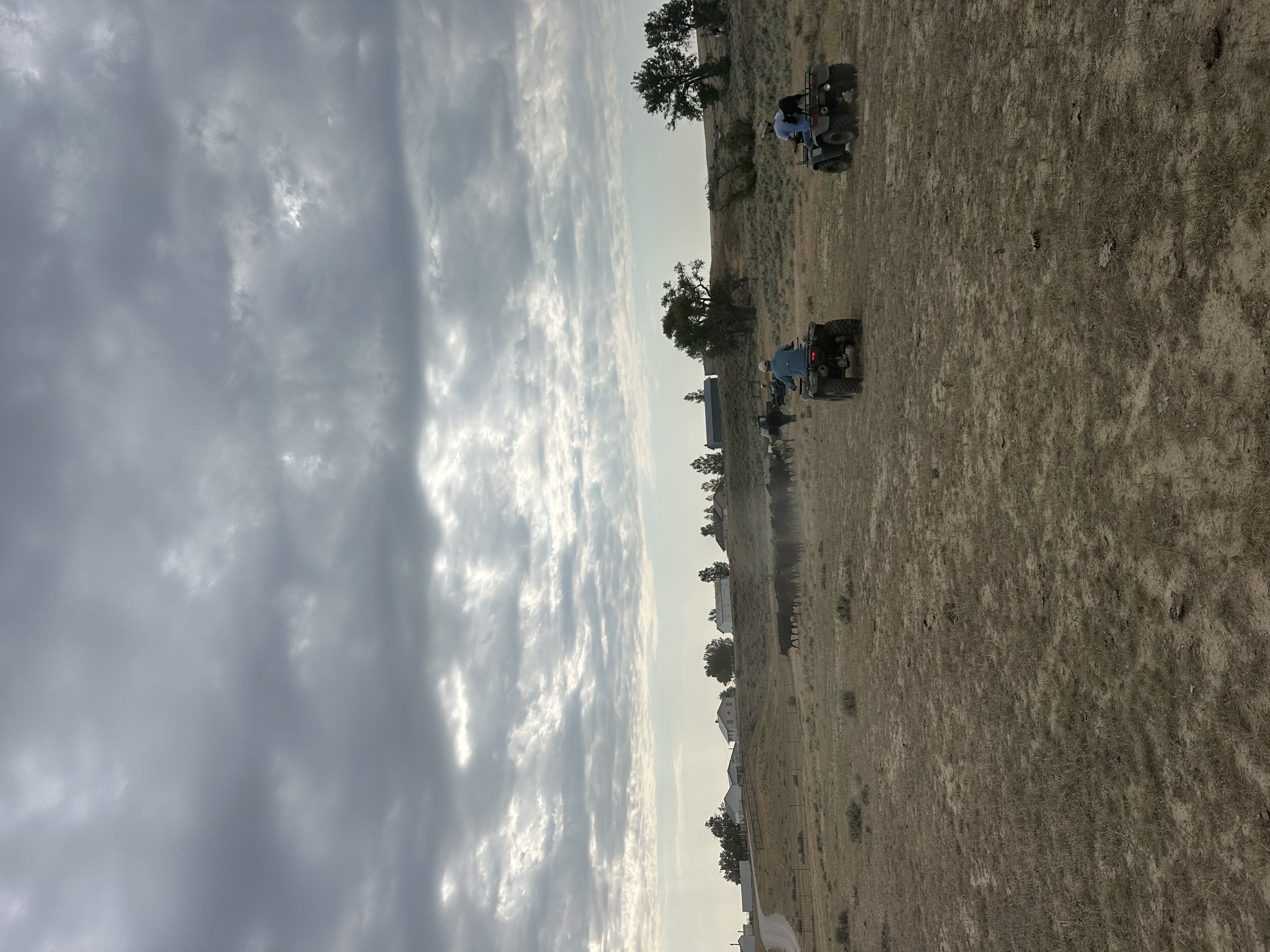
On Thursday, we moved 12 bulls between pastures. The first move went smoothly in the morning, but later we had to move them again after a group of seven got into the neighboring pasture. The only thing separating them from a group of cycling cows was the highway, so we had to act quickly. When we arrived, the bulls were in the corner, pushing on the fence. The other group of five stayed in the pasture we had moved them to that morning, but to keep them from getting out as well, we moved them back to their original pasture. Moving the smaller group started well, but one bull decided he wanted to eat thistle flowers on the other side of the fence, thus squeezed between the barbed wire and ended up in the area along the train tracks. This took some extra work to get him back. Luckily, there was a gate nearby, and we were able to guide him through it and continue moving the group without any issues.
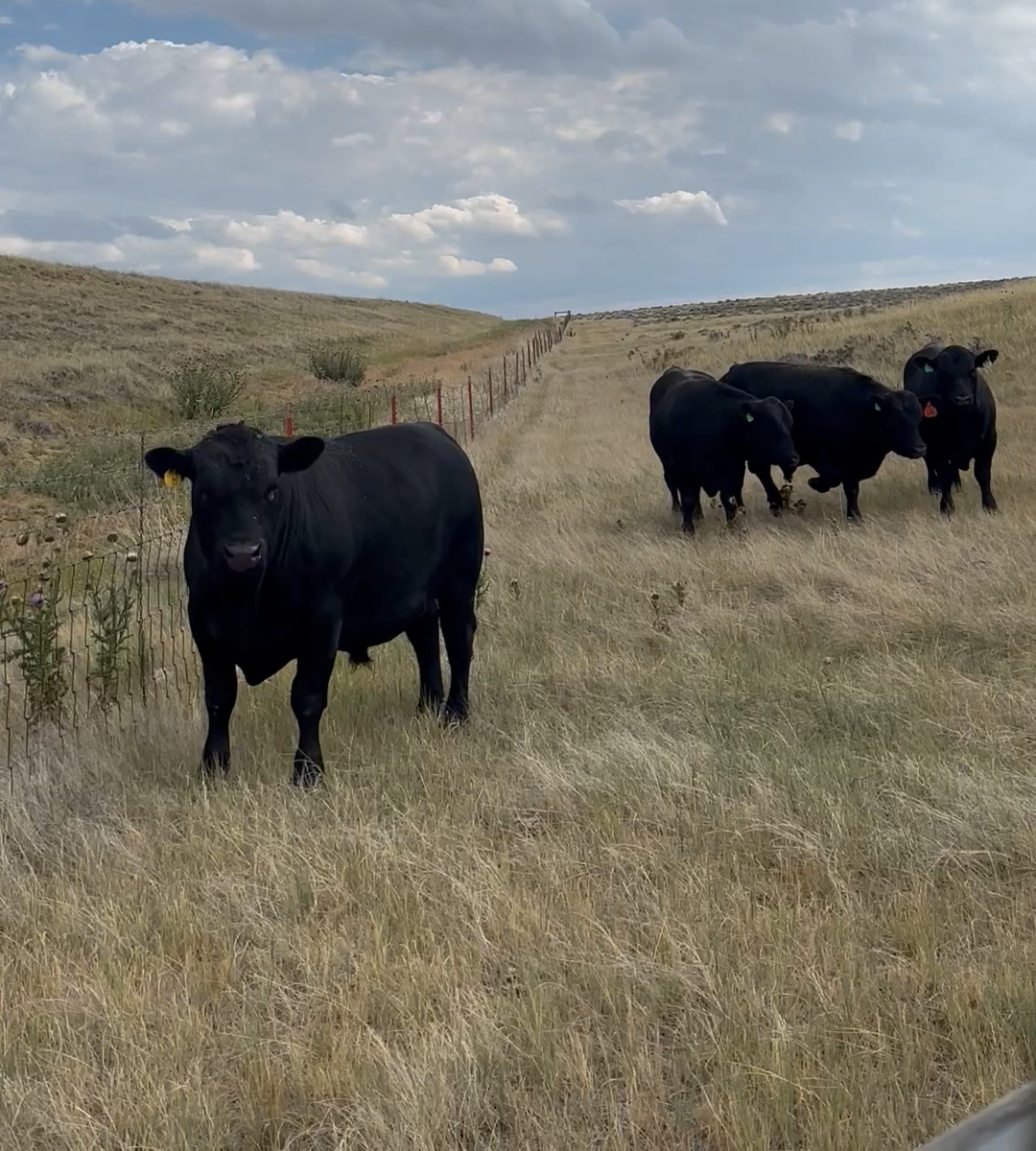 CLICK the image to view the video
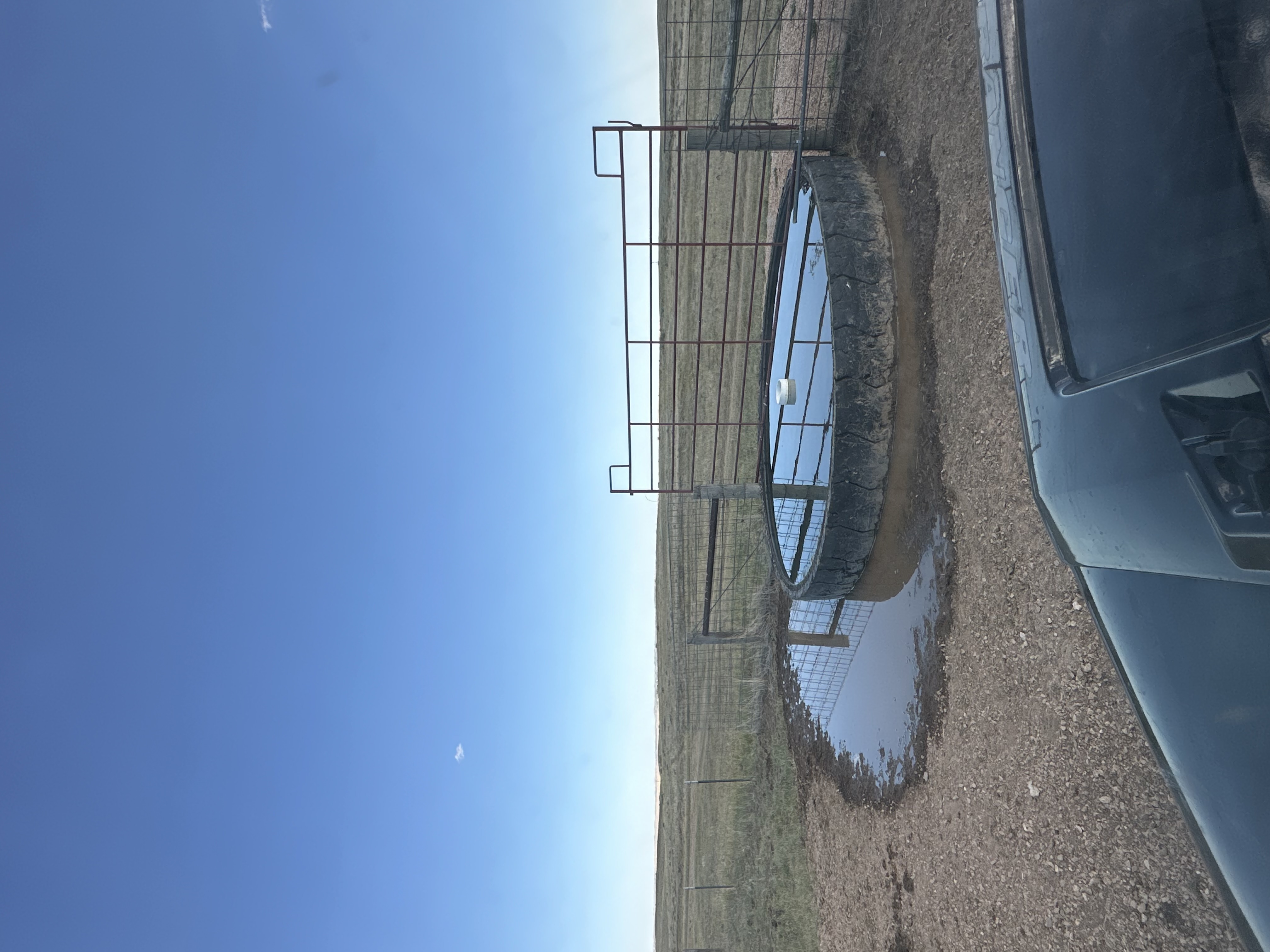
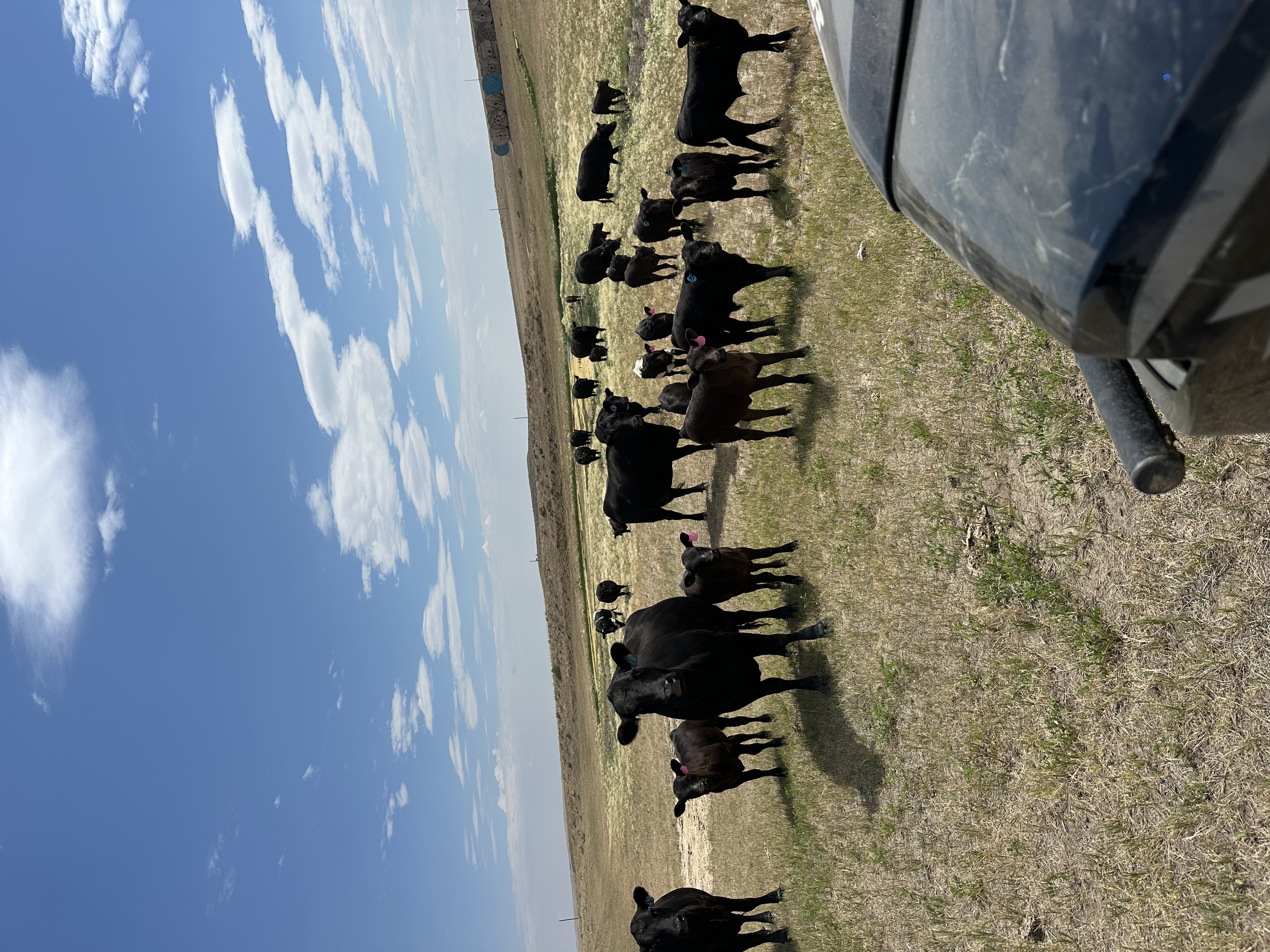
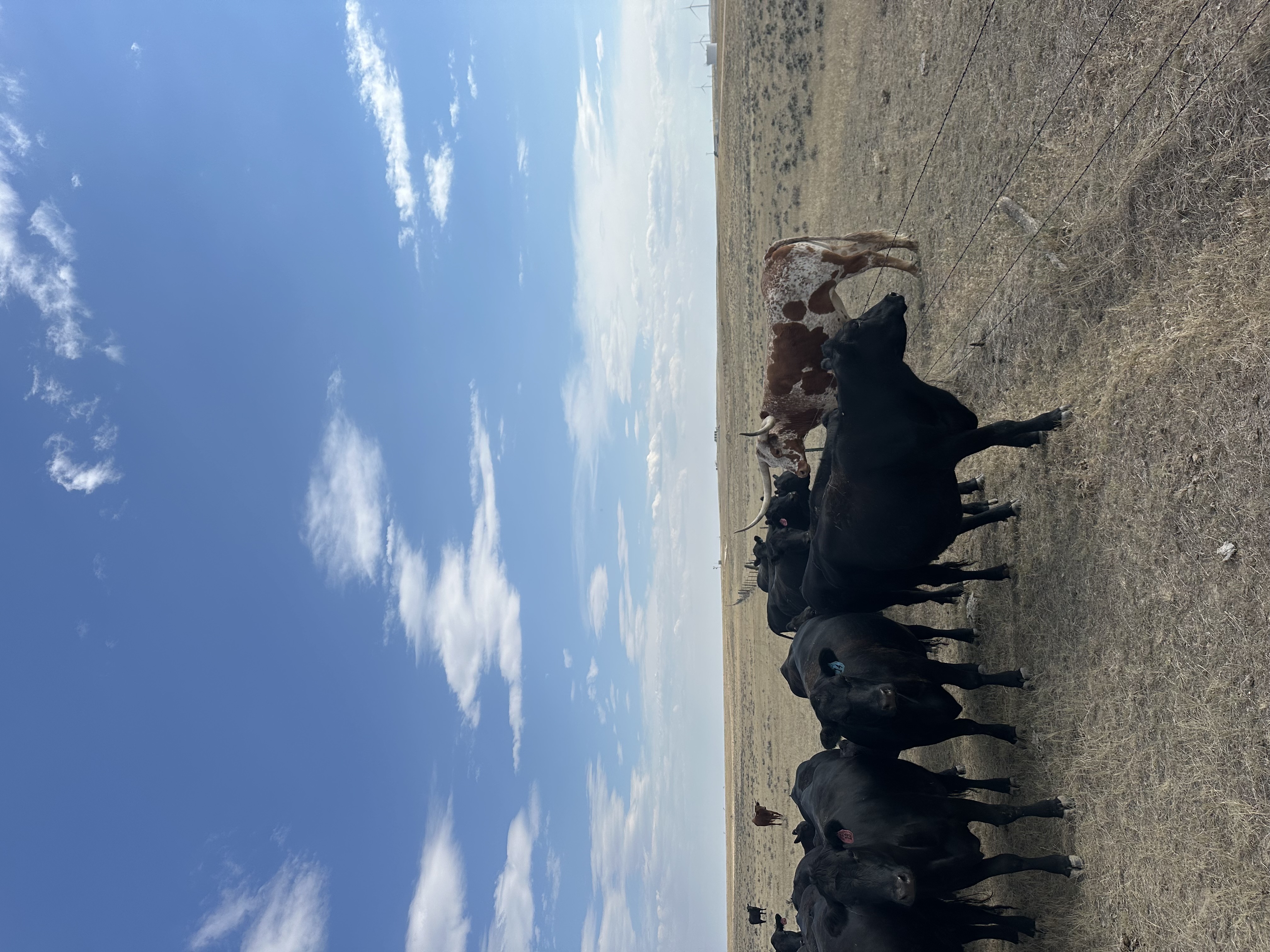
Lastly, we moved our larger group of branded cow-calf pairs to a pasture farther from the house the week before, so it became my job to check on them each day. The neighbors, who own the pasture next to ours, have a group of Longhorn steers. While they are very interesting to see, the fence between the pastures is not in the best shape. Because of this, it was my job to ensure none of our calves were on the wrong side of the fence, that their stock tank stayed full, and that they always had mineral available.
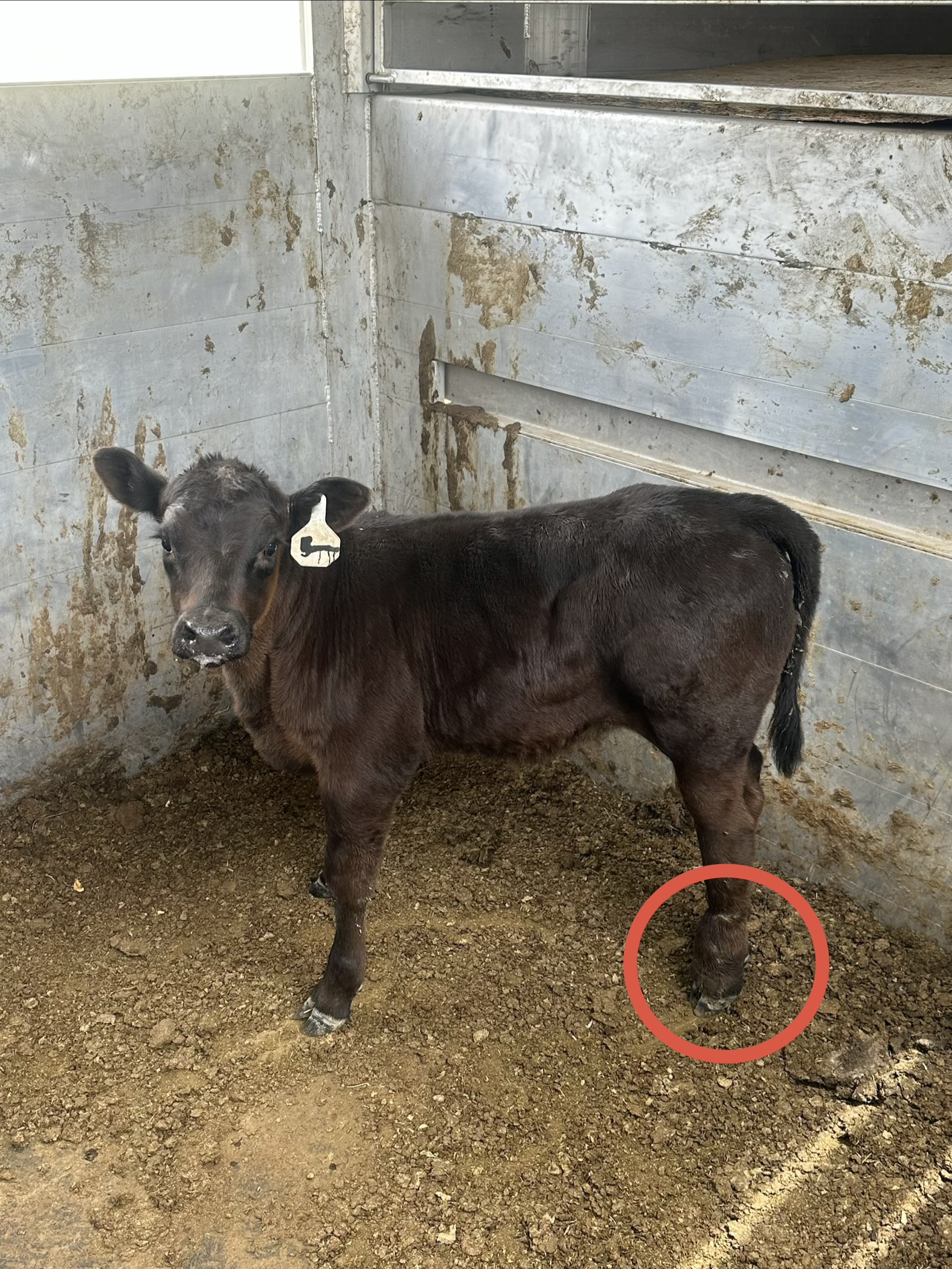
Checking this group was especially important because a calf in our smaller group got caught in a fence either Sunday or Monday. The calf now needs daily antibiotics and wound spray, with the additional hope that the blood circulation returns to normal in its hoof. As of right now, the hoof and leg below the wire wound are extremely swollen and unable to be flexed, with the vet suggesting the possibility that the hoof may become necrotic. Because of that, making sure the larger group stayed safe became a top priority.
This week I would like to challenge the idea that good management and daily livestock checks can prevent every accident or injury. This week showed that even with regular monitoring and proper care, cattle can still be unpredictable. The bulls getting into the wrong pasture and the calf becoming caught in a fence showed that unexpected situations can still happen. While daily checks help identify problems early and allow for quick treatment, they cannot eliminate every risk. This experience reinforced the importance of checking your livestock, despite not being able to change certain outcomes. By staying alert, you can catch issues early and adapt as needed.
This also made me question: When is it better to change a management practice versus accept the risks that come with raising livestock? While some situations seem to require changes to improve safety and prevent future problems, other challenges appear to simply be a part of working with livestock. Understanding where that balance falls can be difficult, but it also emphasizes the importance of continuing to learn and improve as a producer.
This week provided me with valuable experience in understanding the importance of adaptability, responsibility, and decision-making when working with livestock. Even with proper care and daily checks, unexpected situations can still occur, which showed me the importance of staying observant and being prepared to respond when challenges arise. Through moving cattle, monitoring pastures, and taking on new responsibilities, I gained more confidence in my ability to handle different situations independently. In the future, I can apply these experiences by continuing to focus on animal care, paying attention to details, and understanding that successful livestock management requires both prevention and the ability to adjust when things do not go as planned.
Submitted by: Celise Pacheco
Edits by: GrowinG Internship Team