
Processing Chickens
#bfrdpwy #aginternship #RightRisk
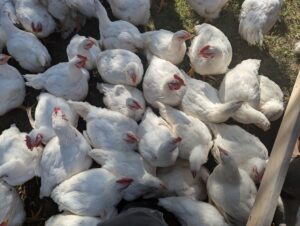
This week has been moderately busy. We packaged chicken and parts to be sold at the local market in town, helped a friend of my host family stack hay, and had another chicken processing day. We also had some days that were slower because of the heat and Independence Day.
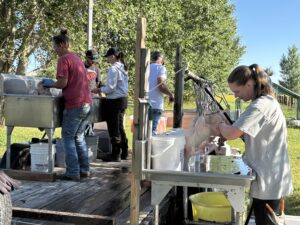
This week when processing chicken, I chose to participate and learn how to do every station: from killing down to evisceration, which is where I spent all of my time last week. When killing the chicken, I learned that the blood vessels on either side of the neck are cut but the entire head is not removed. This allows the chicken to bleed out without it continuing to jerk and move as much as it would have it the head were completely severed. Once the chicken has stopped moving and the blood has stopped flowing, then the head is removed and the chicken is sent to the plucking station.
The water for the plucking station is kept around 145°F. The chickens are rotated in and out of the water 6 times, which is about two cycles on the machine. Then the chickens are checked to see if they are ready for the plucker. This is done by either pulling feathers from the wings or removing skin from the feet. If either one is done easily then the chicken is ready. The plucker is a rotating drum that has rubber fingers. Water sprays out from the top and the chickens tumble around in it until all of their feathers are removed. Then the plucker is stopped and the chickens double checked before being sent to the next station.
The next station removes the feet and tail at their joints, loosens the crop so that it can be pulled out, and removes the neck. This station I thought was the easiest because there were less things to watch for or check. It did need to be precise as it was the station that made the outside of the chicken look ready to sale. After this the chicken is eviscerated, rinsed, and put into a giant tub of water to keep it cool until it is time to be packaged.
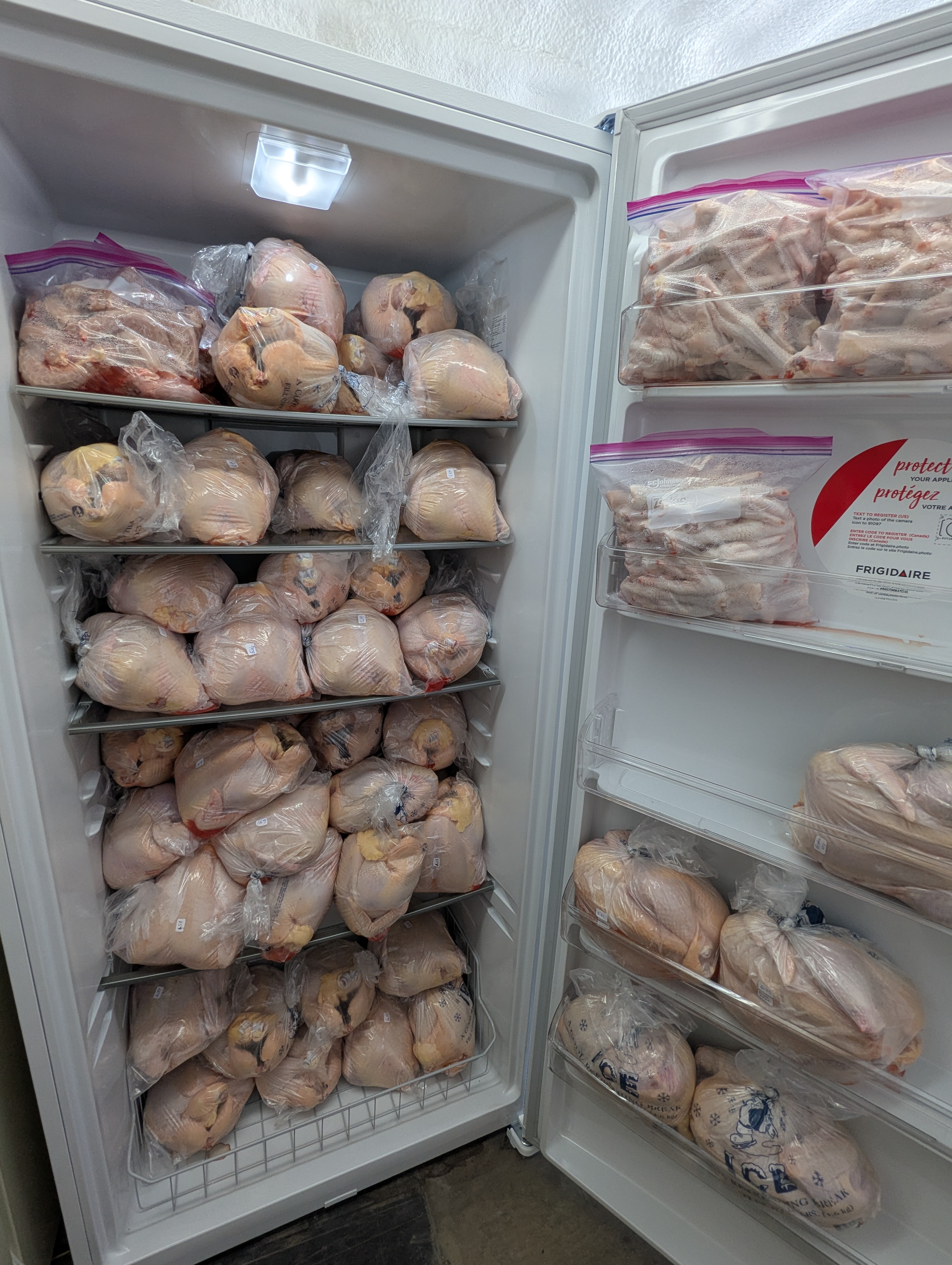
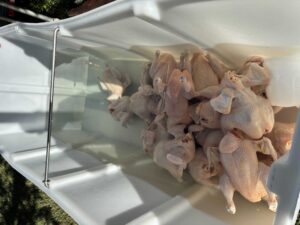
We finished up processing all of the chickens early enough that we were able to start packaging them for this afternoon’s buyers before lunch. We first start by pulling the chickens out of the giant tub they were sitting in to keep cool. They are placed on rack so that the water can drain from them and checked over for pin feathers and broken limbs. Then they are sent to the next person who checks the inside for organs that weren’t pulled out. The final person packages the chickens and weighs them. He also makes note of imperfections such as the broken limbs on a sticker that is placed on the package.
The chickens that aren’t picked up this afternoon will be kept in the fridge for two days before packaging for the market. I learned that this allows them to become more tender, like aging does for a cow. Anything that has defects will be kept and not sold so that only the very best products are going to customers. I think this is an important practice because it will help earn consumer trust and build a reputation for a high-quality product.
An interesting problem also came up this week when the cows chewed one of the temporary electric wires that was acting as their gate. There is not currently a way to make it hot because the fence is bad and needs fixed. We ended up putting two temporary electric fences that went from a hot fence to the gate. This kept them in the area we wanted them while also buying us time before we have to fix the gate.
A concept that I would challenge this week is daily feeding of cattle. This week we started feeding the yearlings daily because the pasture where they are has run out of grass. We noticed that the cattle are not as active as they used to be because they are waiting on us to bring them food. They have become dependent on us and will not forage for themselves like they used to. This concentrates the cattle to one area which keeps their manure in that area and doesn’t spread it around like it needs to be to fertilize the pasture. I think that it is also more expensive, because not only are we feeding them food, we have to bring it to them, which costs us in both fuel and time. The cattle that are kept on the farm are moved daily so we are not bringing them food. They ignore us for the most part and are not heavily dependent on us. They will move about the entire pasture, spreading the manure around as they walk. This is also cheaper because there are not any feed costs, a huge time commitment, nor fuel costs because we move the cows while on foot and it takes about ten minutes at most. Feeding the yearlings is about double that plus travel time.
Some questions that I still have after this week are: how can cows be kept from chewing on things they shouldn’t? Do cows chew on things because they are bored or are they missing something in their diet? Why are the federal processing regulations for chicken different from both cattle and sheep? I learned that cattle and sheep have to be processed at a USDA inspected facility to be sold, but chicken can be processed at home for sale if the number processed is less than 1,000.
I plan to hold onto what I have learned this week. The chicken processing from this week adds onto what I learned from last week. The cattle issues we have had provide interesting problems for me to think about. The cattle eating the gate is an interesting phenomenon that I will keep in mind for future reference. What happens when cattle are fed daily instead of moved is something that I will remember and try to come up with ways that I can prevent it from happening on my own ranch in the future. At present, I think that a drought plan will be helpful for such situations.
Submitted by: Anna Agee
Edits by: GrowinG Internship Team