Importance in Prep and Routine
#bfrdpwy #aginternship #RightRisk
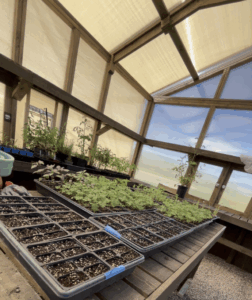
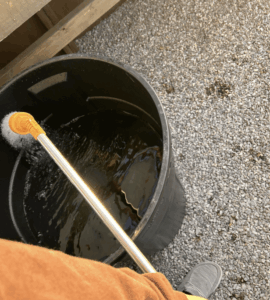
This week taught me how important routine maintenance and setup tasks are to the overall success and efficiency of a working farm. Watering the greenhouse plants and those being hardened off reminded me that even simple tasks like using a watering can require attention and care. Each plant is at a different stage of development and has slightly different needs, and it’s my job to make sure they all receive the right amount of water. I also became more familiar with using the drip irrigation system, which is a time-saving and efficient method of watering but still requires monitoring to ensure everything is functioning properly.
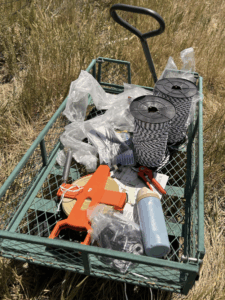
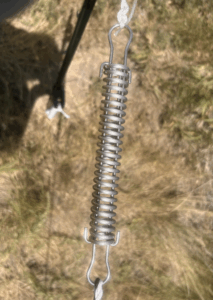
I also learned a lot from building the 3D deer fence with Emzie and the high school volunteers. We had to measure distances carefully both between the poles and away from the existing fence line which required patience and teamwork. When we ran into the problem of missing a part, I learned how to stay flexible and use creative problem-solving to keep the project moving forward. I’ve realized that success in this type of work depends just as much on adaptability as it does on knowledge or experience. These types of hands-on projects are helping me grow more confident in my decision-making and problem-solving abilities.
One concept I’d challenge is the idea that once something is planted or installed, the job is finished. For example, while planting the plum trees for the windbreak, it became clear to me that the planting process is just the beginning. These trees will need watering, protection from pests, and consistent monitoring to ensure their long-term survival. It made me think more critically about how much responsibility comes with each step on the farm, and how long-term success requires ongoing care and attention especially for projects that are designed to benefit the farm years into the future. Another idea I’d challenge is how we view time spent on repetitive or labor-intensive tasks. Watering plants or digging holes for trees can seem tedious or time-consuming, but this week showed me how essential these tasks are to the overall operation. They may not seem glamorous, but they are foundational to keeping the farm healthy and productive. I think sometimes there’s a tendency to undervalue this kind of work in favor of more technical or creative tasks, but this week helped me appreciate the balance between both types and the importance of giving them equal respect.
I’m still wondering how the farm determines which types of trees or plants are best suited for things like windbreaks or natural fencing. How are those decisions made based on soil type, climate, availability, or something else? I’d like to learn more about the planning and decision-making process that goes into adding new plants to the landscape, especially when they’re meant to serve a purpose beyond just food production.
I’m also curious about how to improve the efficiency of infrastructure projects like fencing or irrigation. Are there certain tools or techniques that can make these projects go more smoothly or quickly? For example, is there a tool that could help us lay out fence posts more efficiently than measuring by hand each time? These kinds of improvements could really help when time and labor are limited, and I’d like to explore ways to make our work even more effective.
In the coming weeks, I plan to continue taking initiative on irrigation and watering tasks to support the health of the greenhouse and hardening-off plants. I’ll also be paying closer attention to how the plum trees and deer fence perform over time. I want to track their progress and make note of anything that could be improved for future projects. Whether it’s adjusting watering patterns, inspecting the fence for wear, or observing plant health, I’m ready to apply what I’ve learned to support these longer-term goals.
Additionally, I want to use this week’s experience to continue building my skills in farm planning and execution. Measuring accurately, staying flexible, and problem-solving with limited resources are all critical abilities I want to keep sharpening. I plan to ask more questions about tree selection and fencing methods to deepen my understanding of farm infrastructure, and hopefully contribute even more meaningfully to upcoming projects. I want to continue showing initiative and learning from every task, no matter how big or small it seems at the time.
Submitted by: Courtney Robb
Edits by: GrowinG Internship Team