Ventenata, Medusahead, and Wyoming Rangelands
#bfrdpwy #aginternship #RightRisk
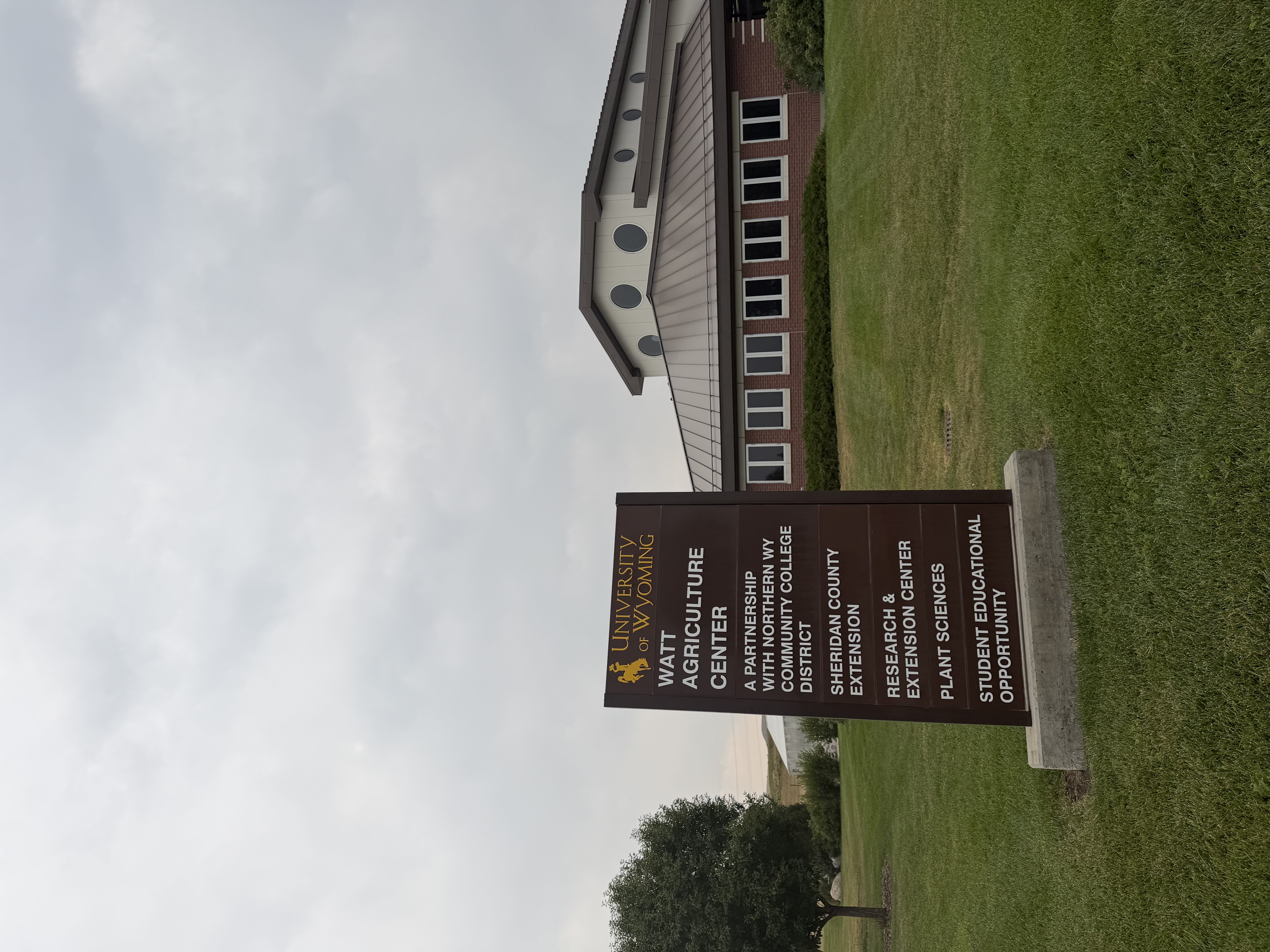
This week I want to focus on an educational event that stood out as one of the most informative experiences of my entire internship. On August 12th, I attended a workshop up in Sheridan hosted through the University of Wyoming. The focus was on identifying and understanding ventenata and medusahead grasses which are two invasive species that have become a growing concern for landowners and ranchers across Wyoming. I came in knowing very little about invasive grasses, and I left with a much clearer picture of the environmental pressures that farmers and ranchers here are quietly navigating alongside everything else they manage.
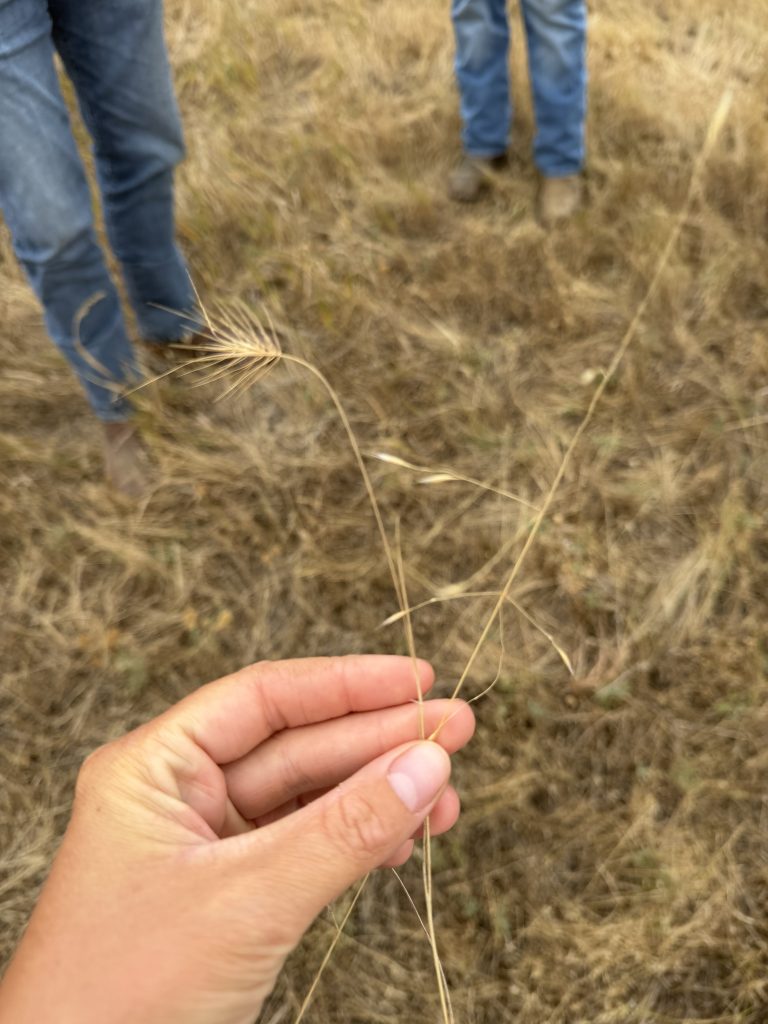
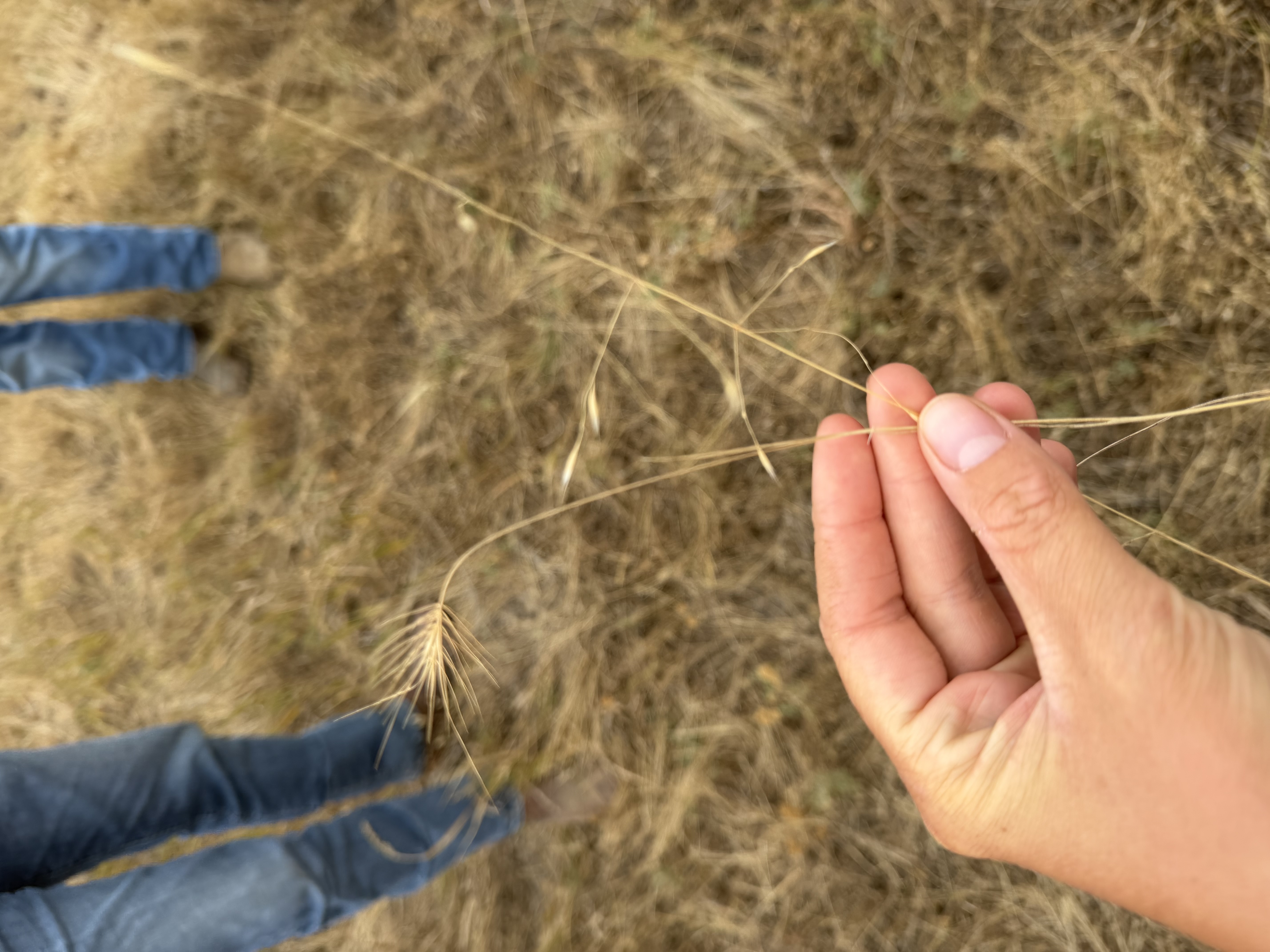
The workshop covered four grasses in total: cheat grass, Japanese brome, ventenata, and medusahead. Each has its own characteristics and challenges, but medusahead stood out as particularly problematic. Cattle tend to avoid it, it leaves behind a dense thatch layer after the season ends, and it spreads rapidly through seed dispersal. What I found striking was the current approach to the problem. Rather than trying to eliminate these grasses entirely, the primary goal right now is containment and slowing the spread so that the core areas do not continue to expand. It was good to see how land management decisions are made when a problem is already well established.
The workshop was well structured and genuinely engaging. It opened with a video from a University of Montana specialist who walked through the distinguishing characteristics of each of the four grasses. From there, we broke into teams and were given packets of images and descriptions that we had to match to the correct grass. It was a simple activity, but an effective one. Being asked to identify rather than just observe pushed me to actually retain the information, and it gave me a real sense of whether I would be able to recognize these grasses out in a field on my own. The interactive format made the content stick in a way that a straight lecture would not have.
After the identification exercise, the conversation shifted to solutions. Specifically, what chemical treatments are available, how they are applied, and what the limitations and downsides are. I really appreciated the honesty of that discussion. With local farmers and ranchers in the room, glossing over the drawbacks would have done more harm than good, and the presenters did not shy away from being direct about what works, what does not, and how long results take to show. I asked the program director whether cost tends to be a barrier when trying to get landowners on board with chemical control, since the treatments can be quite expensive. Her answer surprised me as nearly every property they have treated, including private land, has been covered through grant funding, and she and her colleague take on the work of writing those grants themselves. It struck me as an example of extension work at its best. It’s so important to not just educate the community about a problem but actively removing the financial obstacles that might otherwise prevent anyone from doing something about it.
After lunch, which gave me a chance to talk with several of the attendees and add a few more faces to the growing network I have built over this summer, we headed out to a nearby site where all four grasses were present in the field. We were turned loose to walk the area and try to identify what we could on our own, flagging anything we found along the way. It was the kind of hands-on application that made the morning’s content feel real and immediate. During that time I had the opportunity to speak with Bryan Mealor, the founder of the IMAGINE program at the University of Wyoming. It turned into one of the best conversations I have had all summer. He shared a lot of thoughtful advice about graduate school and navigating career decisions in agriculture, and as it turned out, he actually knew a professor from my home university, which made the conversation feel even more connected. Going into the workshop at the start of the morning, I had introduced myself as a participant in the GrowinG program, and several people approached me afterward wanting to know more about it and about my experience.
From my studies, I have come to understand that agricultural outreach efforts often fall short for three main reasons, limited information reaching the people who need it, a lack of transparency about what solutions actually involve, and the financial burden of acting on those solutions. What made this workshop stand out to me was that it addressed all three directly. The information was clear and accessible, the presenters were candid about the complexity of the problem, and the grant support removes the cost barrier for landowners who want to take action. The rest of my week was steady and routine with daily chores, helping wherever I was needed. This workshop was the kind of experience that will stay with me well beyond the internship. It deepened my understanding of the environmental challenges specific to this region and reinforced my respect for the researchers, extension workers, and ranchers who are working together to address them.
Submitted by: Kaci Jericoff
Edits by: GrowinG Internship Team