Hay Fields, Horse Feed, and Water Flow
#bfrdpwy #aginternship #RightRisk
As we began my fourth week, we wanted to begin cutting the hay on our best field but the weather did not permit that as it was windy and raining. However, we did finally get to cut the entire field at the end of the week. Fortunately, this field also passed the weed and pest inspection and therefore can be baled into small square bales in order to be taken up the mountain and fed to the pack horses. We also had a large surge of water on our poorest field. This field was too rocky and did not yield enough to justify cutting this year so we are only using it for pasture. Although it is only being used for pasture, we still have to irrigate the field. For a long time we struggled with a lack of water but then the ditchriders pulled the boards upstream causing us to have a lot of water. We also have been receiving the rest of the horses from pasture so that we can shoe, deworm, and vaccinate them.
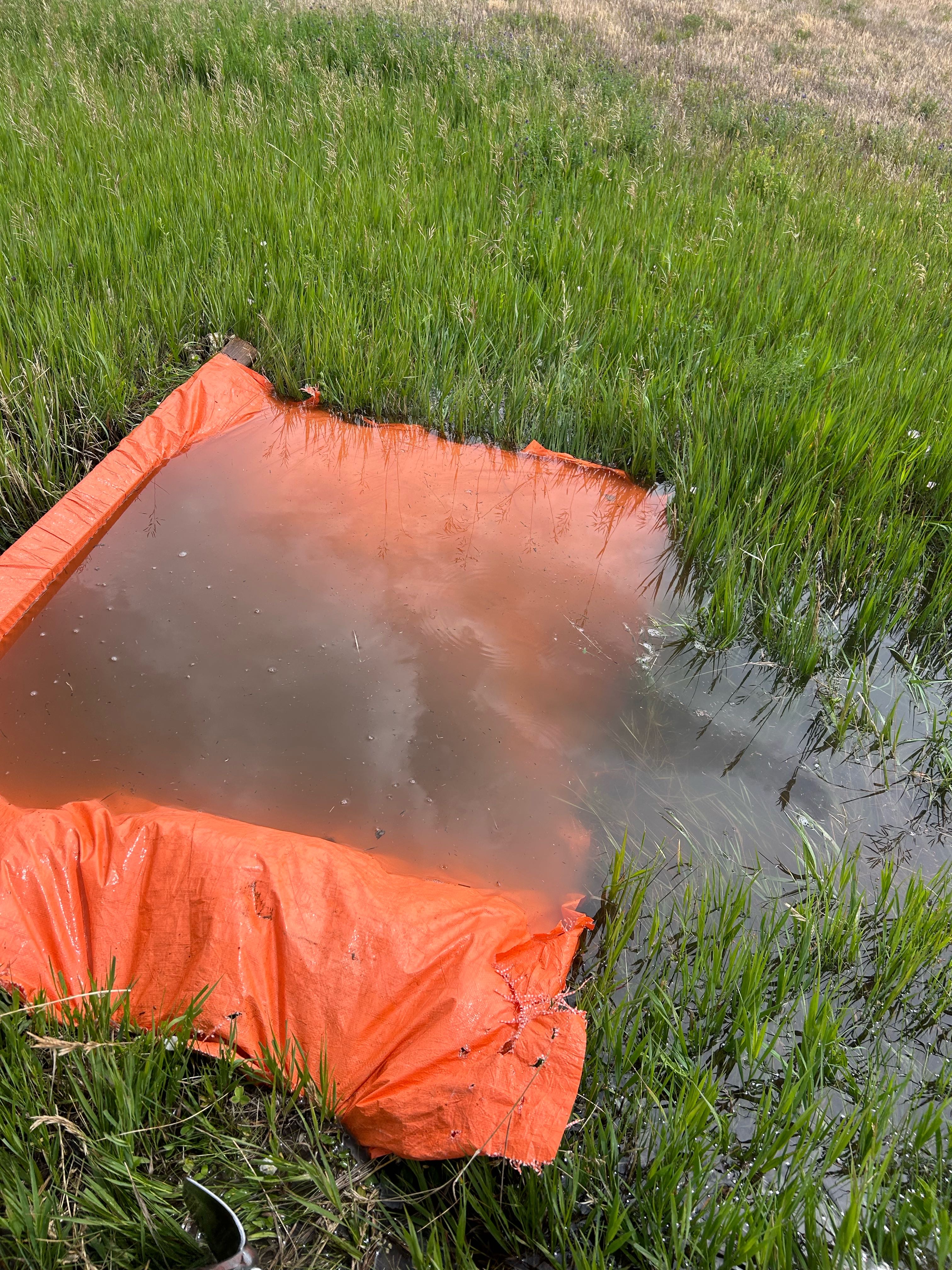
When we had the extreme uptake in water quantity in our far field, there was so much water to the point where the runoff from the irrigating dams were losing water into the ditch that parallels the highway and runs horizontally on the border of the field. This field only uses flood irrigation (ditches and dams) which makes it more difficult to control water flow as the water is confined to the ditches. Additionally, these ditches have blown edges and many leaks, causing water loss and waste. The method we use to irrigate the field is leapfrogging. We run the water from the canal into the ditch at the top of the field and place dams. The water then irrigates the field and runs into the next ditch down. We place dams in that new ditch to extend the use of the water and mitigate loss. This past week, we simply didn’t have enough dams to efficiently use all of the water. There were so many places the ditches were leaking and water was going, we were running dams in four different ditches. If I had a choice, later in the year I’d like to either fix the edges of the dams to prevent leakage or lay gated pipe.
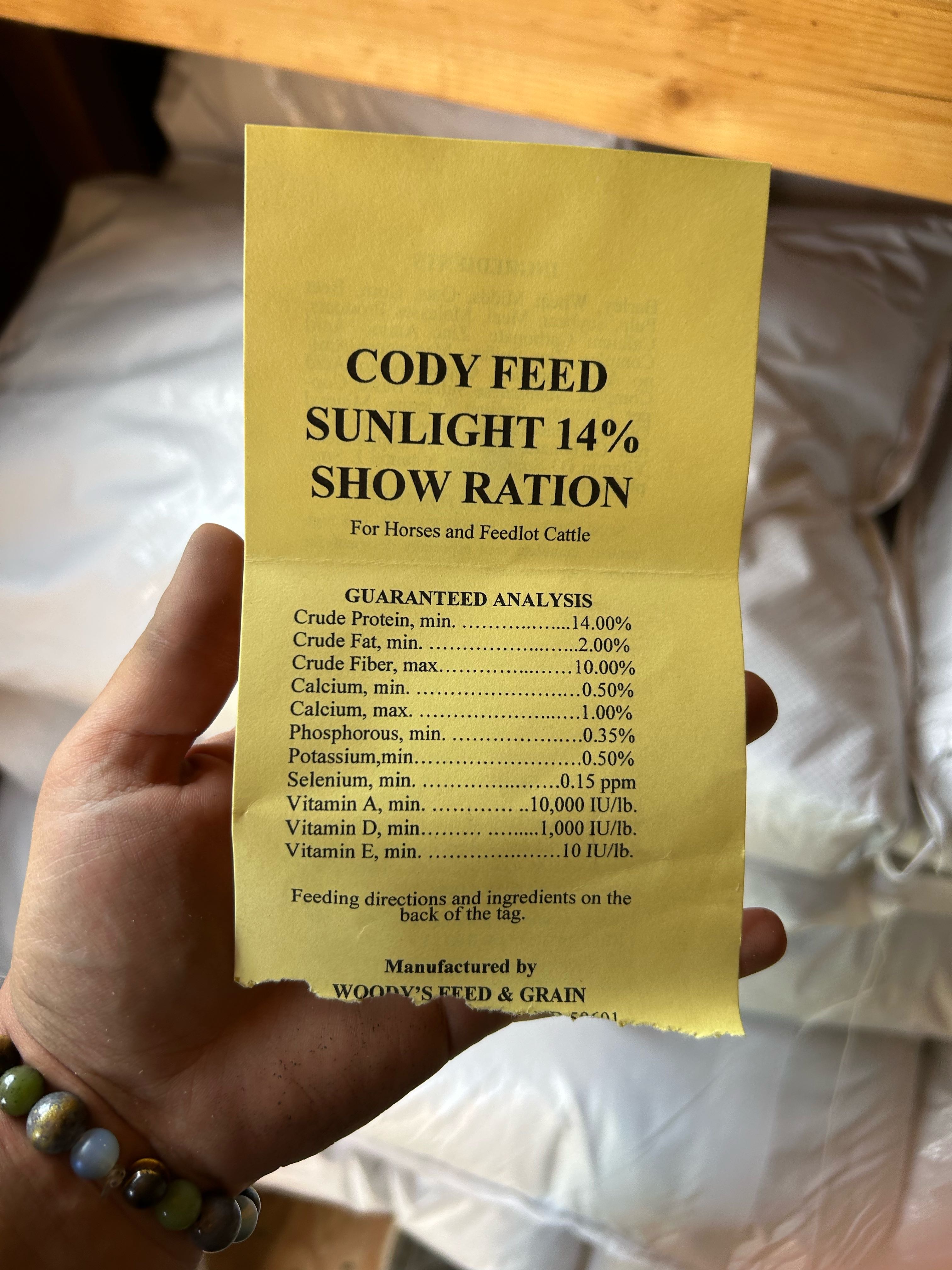
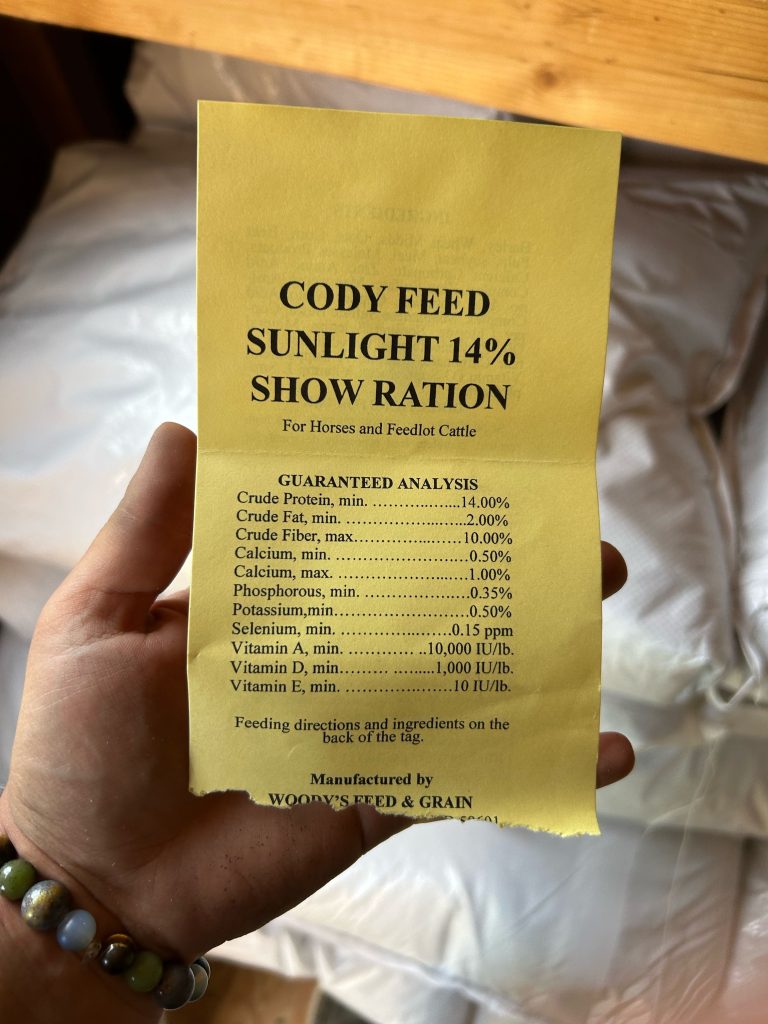
As a supplement to the hay that we feed the horses in the upper mountain while they work, they are fed a grain mixture. This week, we received and moved the bags of specialty grain from a distributor in Cody. On each bag, there is a guaranteed analysis documenting the crude protein, crude fat, crude fiber, and vitamin percentages. Based on my feeds and feeding class from last semester, I know how rations are balanced and formulated. I want to know if they formulate a specific ration for these horses based on weight, age, activity level, and other factors or if they just buy a pre-formulated ration created for a specific class of activity.
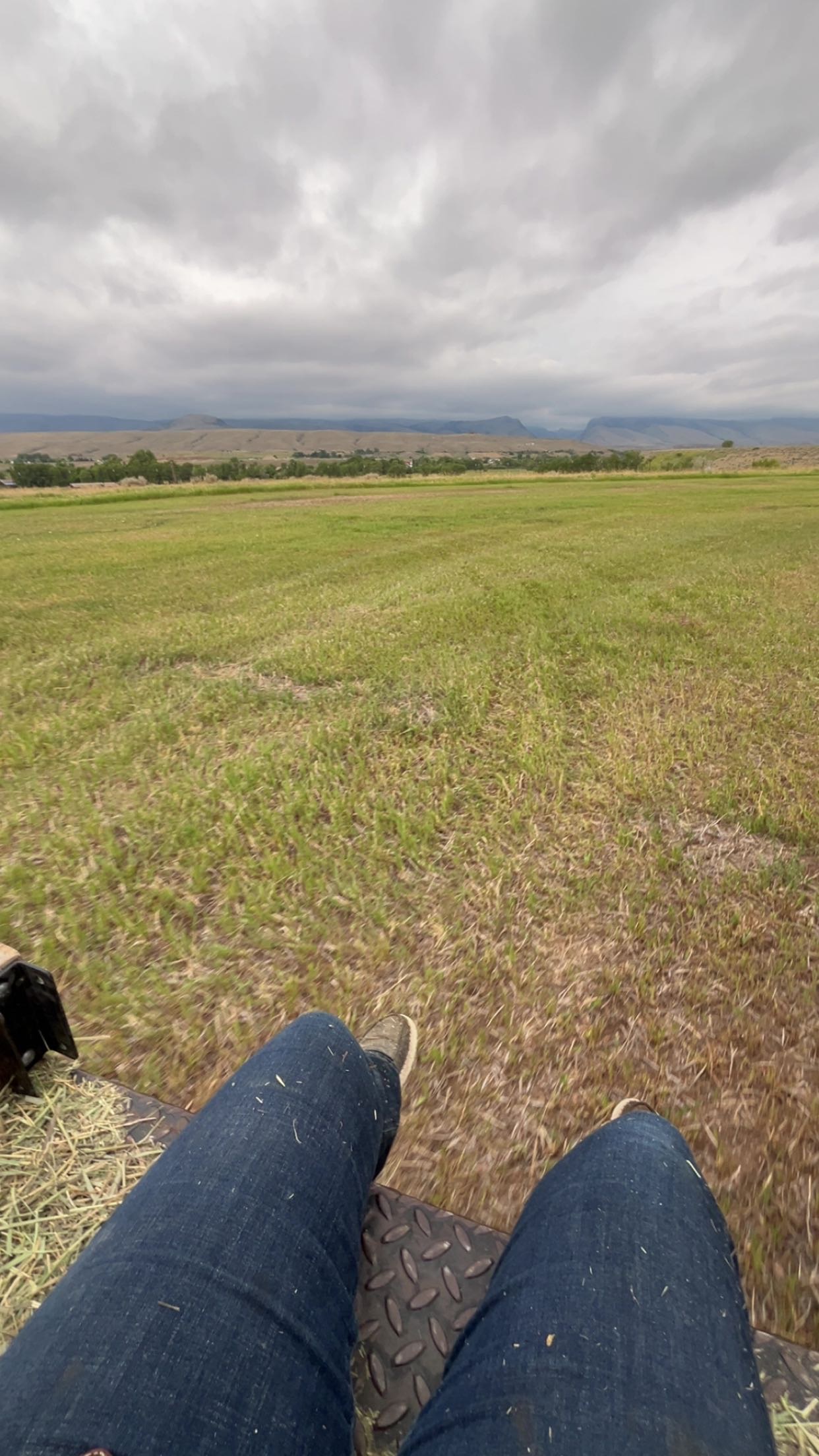
This week, I learned the importance of observing all your factors in order to properly time an event. For example, we waited the majority of the week to begin haying the Allen field because it was too wet and the humidity was too high. Although we would have liked to start the process a bit sooner, it worked out for the best for us to wait as the weather has cooperated with us thus far. This lesson can be utilized in other aspects of life. It is always smart to have all the information in order to make an informed decision so that you can know and understand the cause and effect of your actions as well as any potential consequences.
Submitted by: Kaylee Pearce
Edits by: GrowinG Internship Team