A Week of Bulls, Calves, and Trailing Cows
#bfrdpwy #aginternship #RightRisk
This week I learned more about the management practices that take place during the breeding season and how important timing is for herd health and reproduction. One of the major activities this week was turning out bulls with the cow herd. While I had learned about breeding management in class, seeing it applied in a real setting helped me better understand the planning that goes into maintaining a successful calving and breeding program. I also had the opportunity to help brand and vaccinate the late-calving calves, which gave me additional experience working cattle and observing the importance of herd health practices.
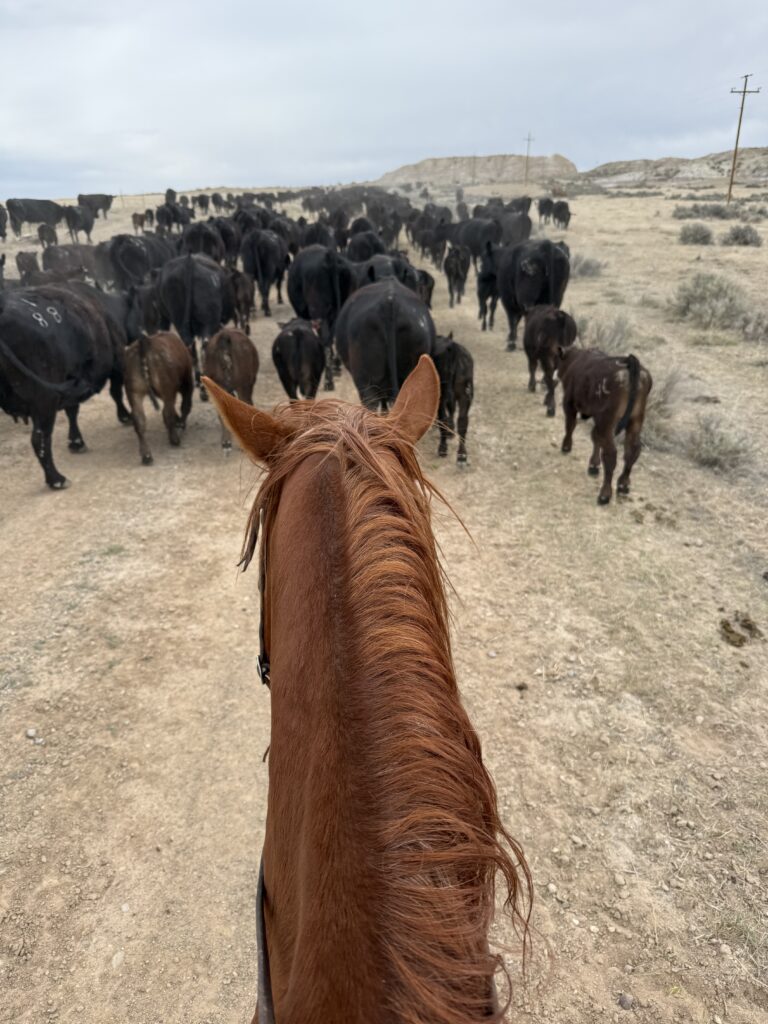
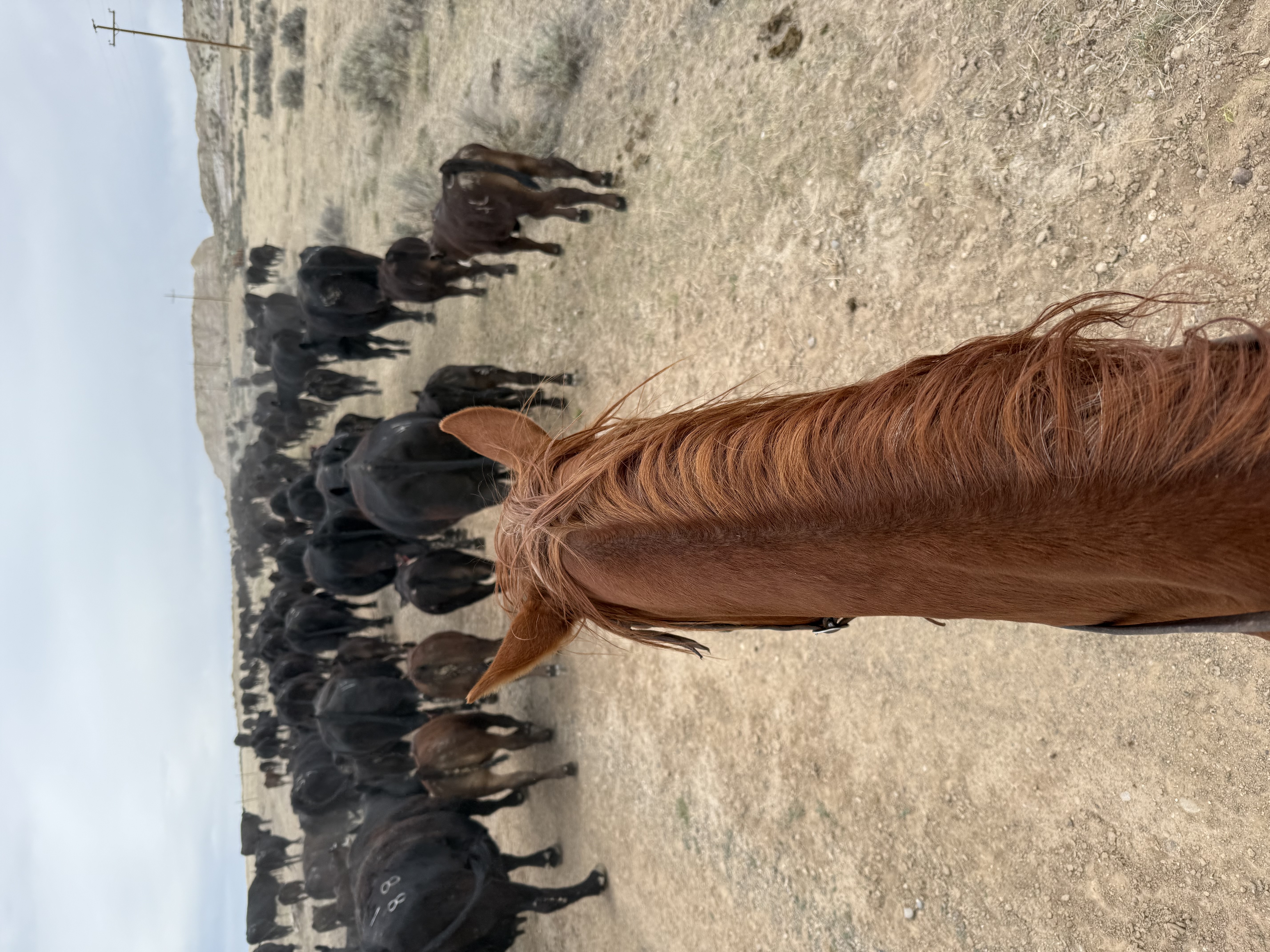
The majority of the week was spent trailing cows, which was a new experience for me. Spending several days moving cattle allowed me to observe cattle behavior and learn how experienced ranchers use horses, positioning, and patience to move livestock efficiently. Throughout the week, I gained a greater appreciation for how much planning and labor are required to manage large groups of cattle across extensive pastures.
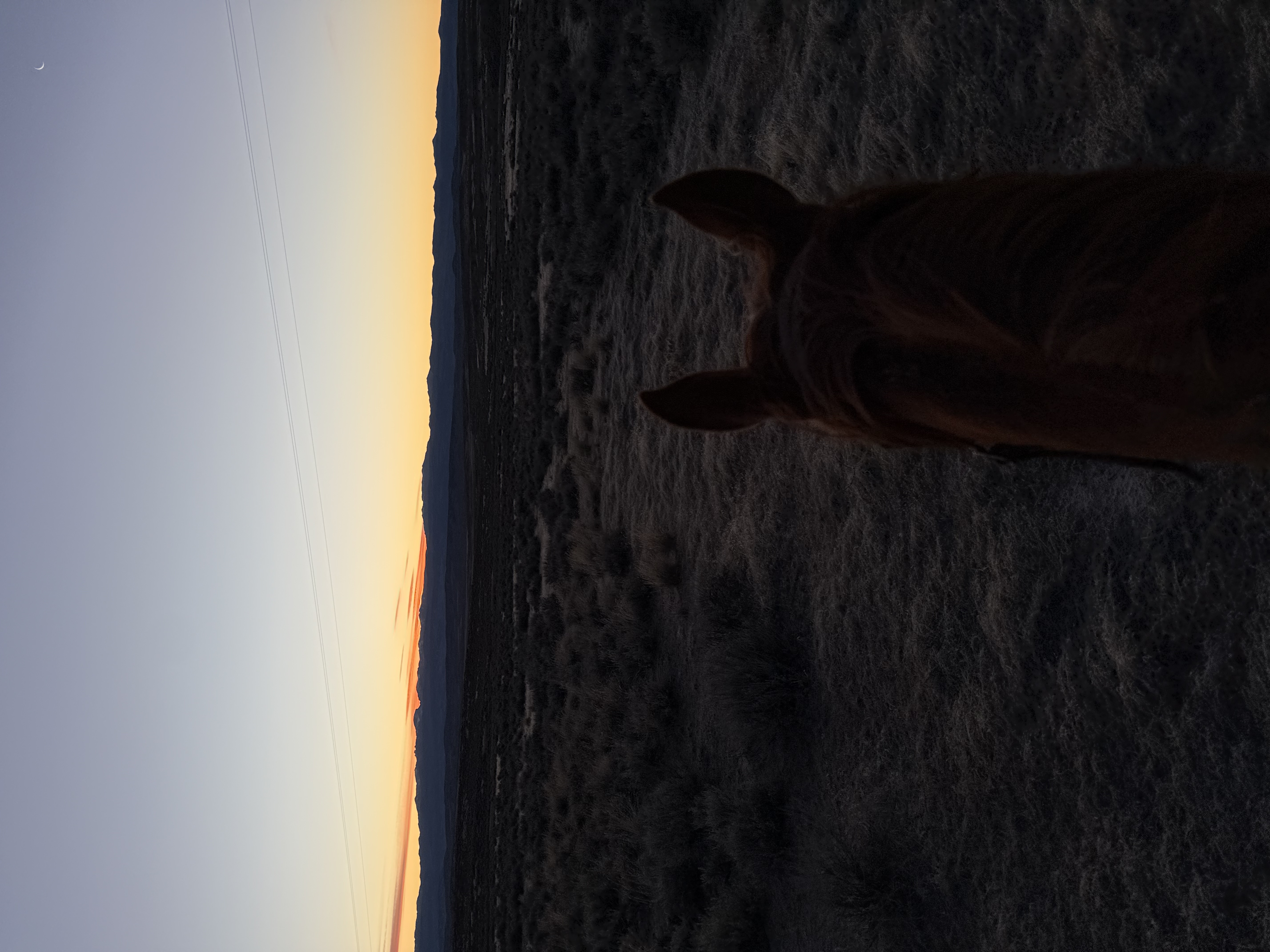
One idea I would challenge is the assumption that moving cattle is a simple task. Prior to participating in trailing cows for several days, I thought it was primarily a matter of getting cattle from one location to another. However, I learned that successful cattle movement requires understanding animal behavior, maintaining proper pace, and working effectively as a team. Small decisions can have a significant impact on how smoothly the cattle move and how much stress is placed on the animals. For example on trailing days we start very early, this is so that we can hopefully get them moved before it gets too hot out, since then they don’t like to move.
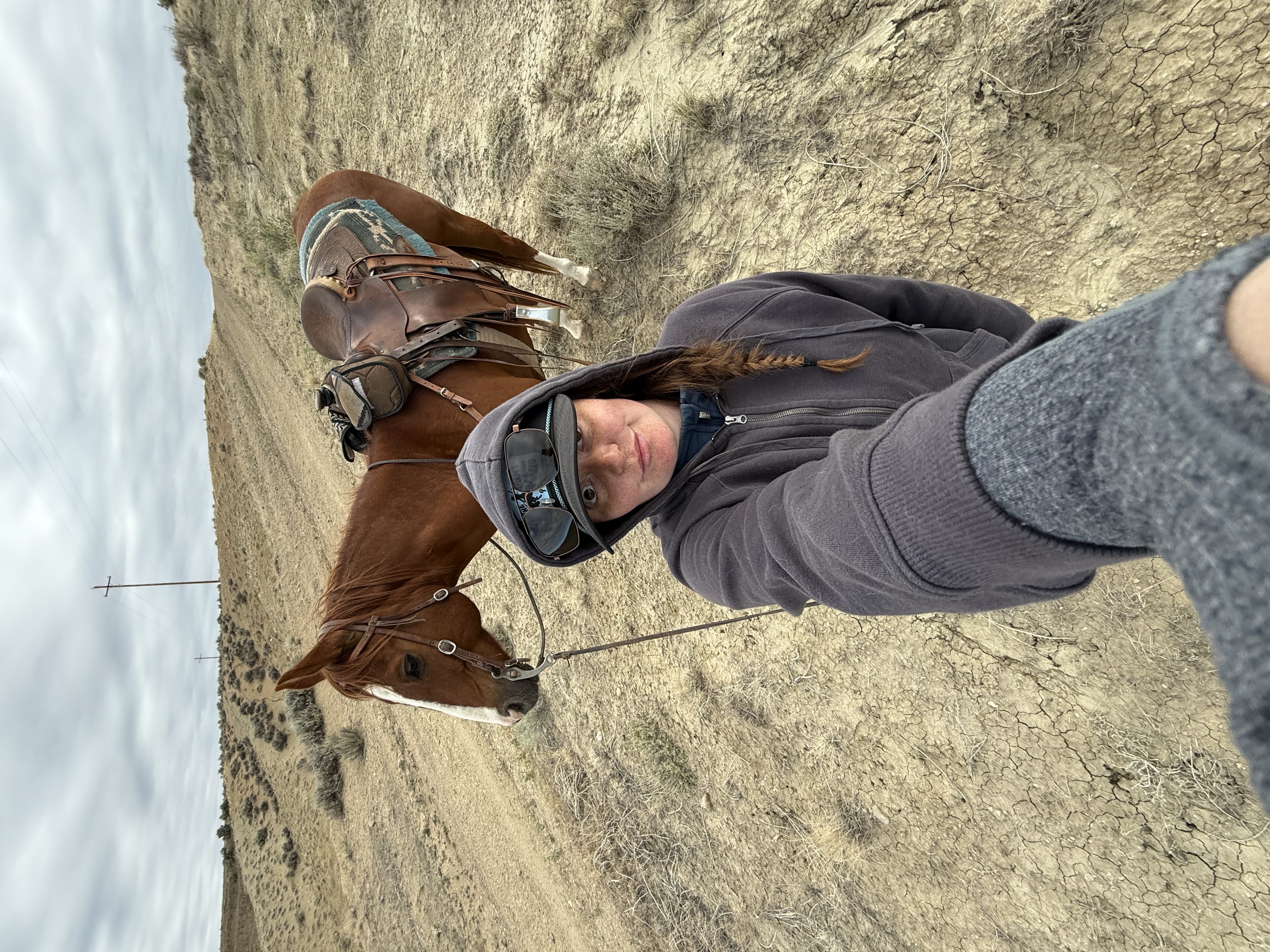
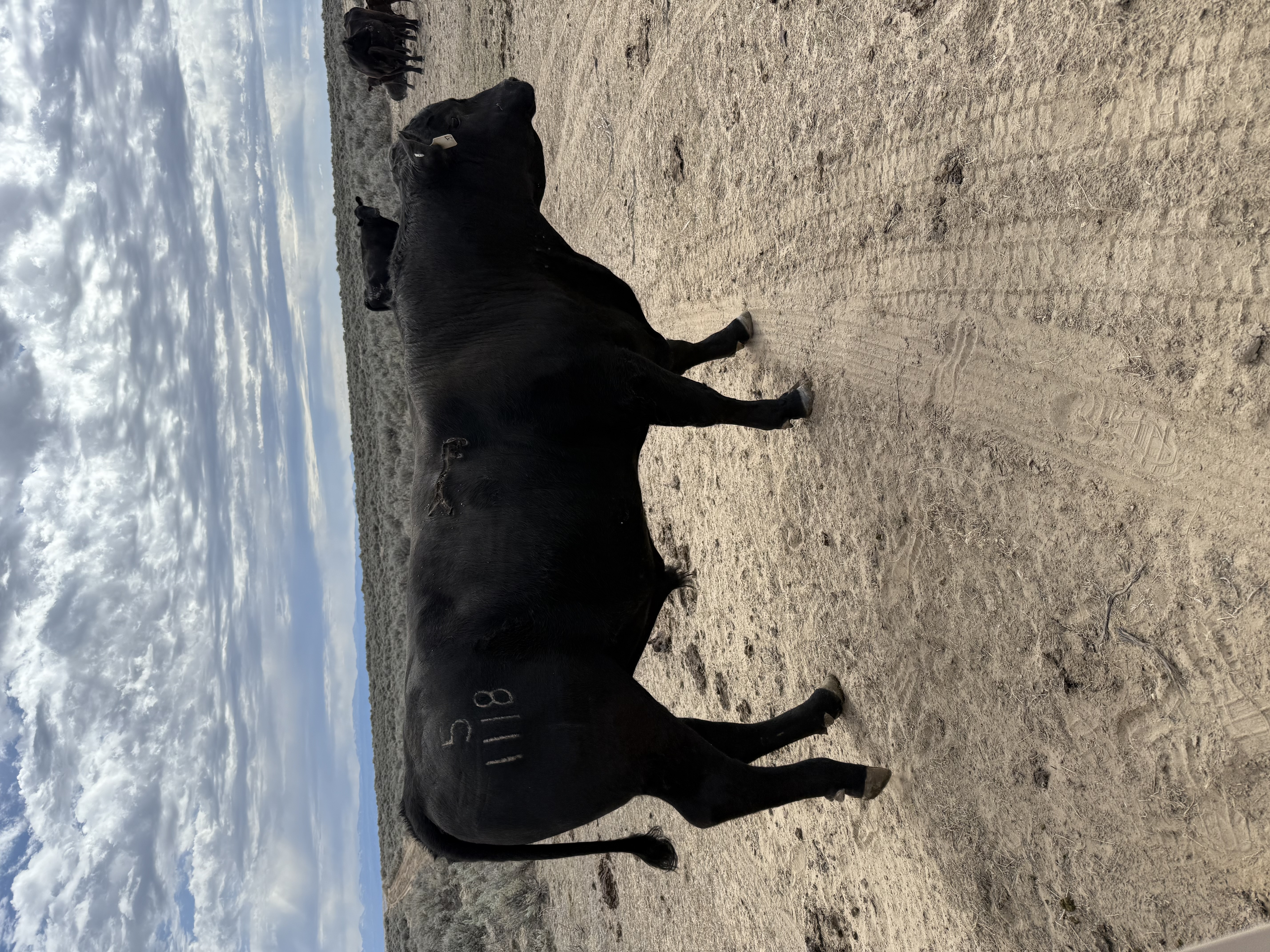
I would also challenge the assumption that turning out bulls is a simple process of putting bulls in a pasture with cows and letting nature take its course. This week helped me realize that there is much more thought involved in breeding management. Ranchers have to consider the timing of turnout, the condition and health of the bulls, pasture size, and the overall breeding goals of the herd. Some of the bulls they use are ones that they personally own while others and ones from the Otter Creek which is a grazing association that they are a part of. Observing this process showed me that successful reproduction requires planning and management long before the calves are born.
After helping turn out bulls, I would like to learn more about how breeding decisions are made. I am curious about what characteristics ranchers prioritize when selecting bulls and how they evaluate whether a breeding season has been successful. I would also like to better understand how reproductive management decisions affect herd performance over time. Also I have learned about the Otter Creek Association and I would like to learn even more about it as the summer continues.
I also have questions about grazing and cattle movement. Since we spent much of the week trailing cows, I would like to learn more about how ranchers determine when cattle should be moved and how pasture conditions influence those decisions. Additionally, I am interested in learning more about the challenges that can arise when moving large groups of cattle and how experienced ranchers handle those situations.
I plan to continue building on the practical skills I have gained during the internship and apply what I have learned to future experiences in animal agriculture. The opportunity to participate in breeding, vaccination, branding, and cattle movement has helped me better connect concepts from my coursework to real-world ranch management practices. This side of the industry also relates a lot to what my career goals are with wanting to become a veterinarian, so I find these things very fascinating.
Moving forward, I plan to use what I have learned this week to better understand how the different parts of a cattle operation work together. Activities such as turning out bulls, vaccinating calves, and trailing cows showed me how management decisions made throughout the year are connected to herd health, reproduction, and overall ranch productivity. As the internship continues, I hope to continue observing these processes and gain a broader perspective on what it takes to successfully manage a ranch operation.
| Submitted by: MacKenzie Jones Edits by: GrowinG Internship Team |