More Processing to Wrap Up the Internship
#bfrdpwy #aginternship #RightRisk
This final week has been very busy. We took four lambs in on Monday to be processed and I was able to help with the processing. The USDA inspector was there as we unloaded the trailer to make sure the lambs were able to walk and appeared healthy. I learned that any animal that looks questionable will be put into a separate pin and observed to see if it improves as the day goes on. The inspector also watched all of the lambs be slaughtered to make sure it was done humanely and quickly. I learned from the man who was doing the slaughtering that if the lamb did not become unconscious after the first try, then he had a pistol as a backup to make sure that the lamb would go down quickly.
I helped with the no tolerance inspection that took place after the lamb was skinned and gutted. In the inspection, we looked for any hair, dirt, or bodily fluids and cut them off the carcass. I learned that wool sheep generally have a cleaner carcass than hair sheep because the wool doesn’t shed as much as the hair does. The USDA inspector would approve how the carcass looked before we washed it down, sanitized, weighed, labeled, and cooled the carcass. The carcass was washed in 180°F water to kill any bacteria then sprayed with an apple cider vinegar and water solution to sanitize it. The USDA inspector said that the carcass has to be cooled to 40°F within 24 hours of slaughter. There is not an aging time for lamb.
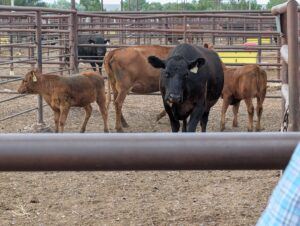
On Tuesday, we took the two cow-calf pairs that we separated from the herd two weeks ago to the sale barn. The process was very simple: we drove to the pens behind the auction house, unloaded the trailer, and my host gave the needed information to the brand inspector.
That same day, a man from Weed and Pest came to give my host some advice about how to manage his gumweed. We learned that gumweed usually appears when pastures are grazed too low. This is usually a problem that appears with horses. He suggested either moving the cows quickly through the pasture so that the grass is left taller to better compete with the gumweed or to spray it with 2,4-D in the spring.
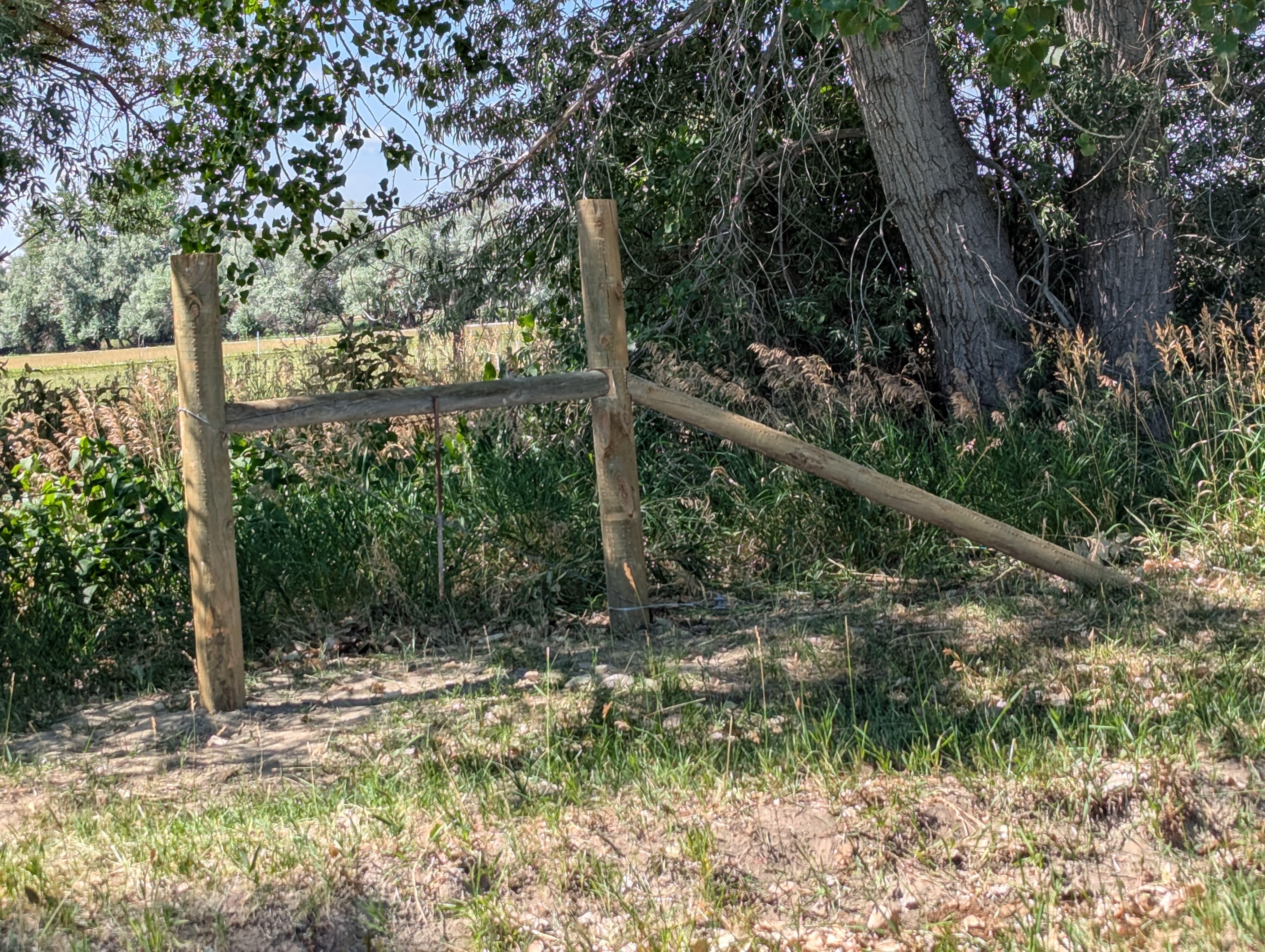
The rest of the week was spent building H-braces and a Kiwi brace. I learned that the braces need a wire to keep them straight against the pull of the fence. The wires for the H-brace are diagonal because that provides greater leverage on the posts. The wire for the Kiwi brace goes straight across the bottom because it is trying to keep the diagonal beam in place. A 45° angle for the leg of the Kiwi brace is best because it will hold up longer and push more against the post holding the fence.
The week was wrapped up with chicken processing on Sunday. I was working at the evisceration station again because that is my favorite station. We noticed while packaging the chickens that some have short thighs while others have longer ones. We think that the short thighs belong to the chickens that sat under the trailer all day while the longer thighs belong to those that would roam the entire pasture all day. This batch of chickens generally liked to roam more than the last batch of chickens we processed. My host told me that each flock of chickens has a different overall personality.
I don’t have any questions that I would like to ask nor any concepts I would challenge from this week. This final week reviewed what I had learned about fencing from the other weeks with a few more details added. I know how the slaughter process works for two different types of livestock which I think will be useful if I ever need to do a home process on lambs and chickens or if I decide to open an abattoir. As I leave this internship, I will look for opportunities to apply and use what I have learned here.
Submitted by: Anna Agee
Edits by: GrowinG Internship Team