Cattle, Calves, Lambs, and Learning Curves
#bfrdpwy #aginternship #RightRisk
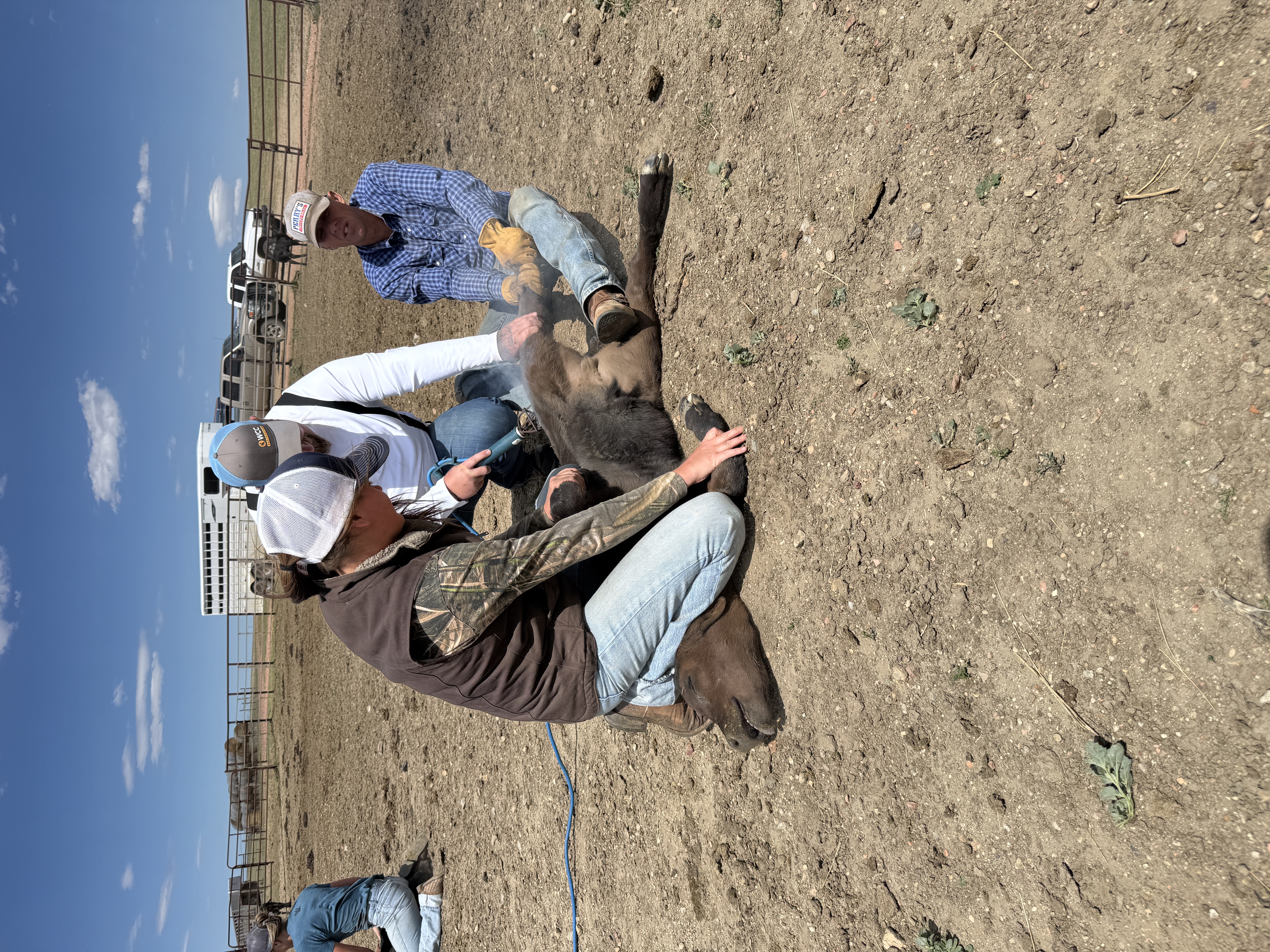
I officially began my internship this past Monday, and although I have only been here one week, it has already felt like much longer given how much I have experienced and learned. The week kicked off even before my official start date — that previous Saturday, I helped move cattle from the summer pasture to the winter pasture due to a lack of rainfall in the Gillette area, as the winter pasture still had more available grazing. My first official day was more relaxed, giving me a chance to sit down with one of my hosts to go over the chores and tasks she wanted to accomplish during my time here. That day I laid mulch around trees, received a tour of part of the ranch, and helped with branding and feeding calves.
Each morning I get up around 6:45–7:00 AM to complete my morning chores, which consist of feeding calves, checking water for all animals, and feeding the horses, lambs, and a small herd of cattle in the corral. I also bottle feed the calves at midday and again after dinner. Once morning chores are finished, I typically come in for breakfast if needed and then head back out to tackle additional tasks for the day.
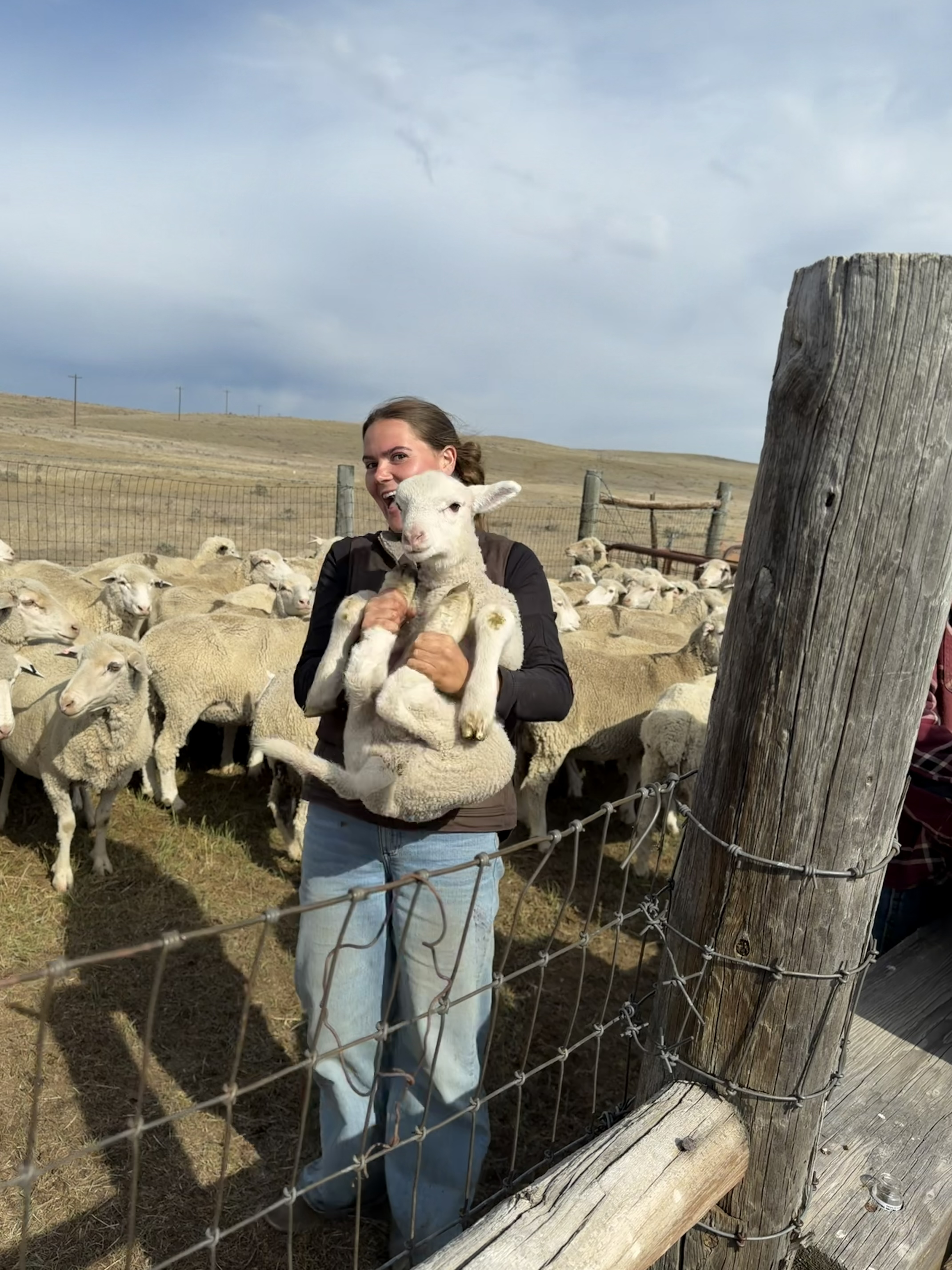
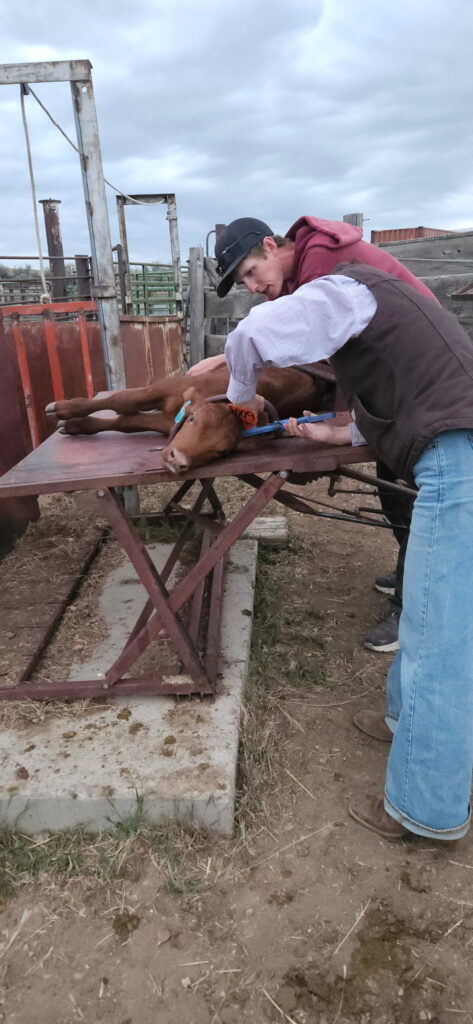
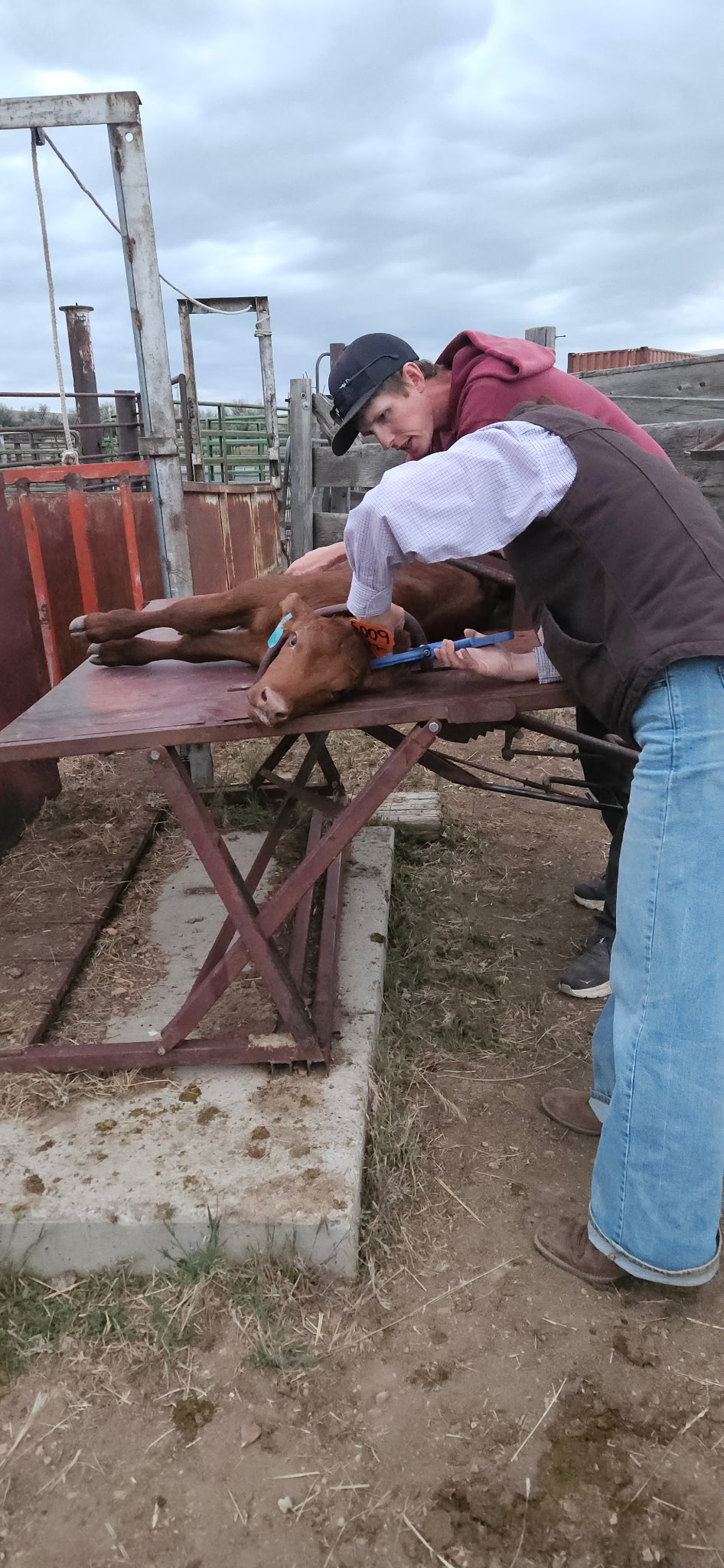
Tuesday was a particularly memorable day. After my usual morning routine, I rode out on horseback to help move a herd of cattle to another pasture. This was something I had always wanted to experience, and it lived up to everything I had imagined. There were a couple of moments where I had to chase down calves that had strayed from the herd, which was both exciting and a great learning moment. After lunch, I joined one of the sons and his wife who live on the property to move sheep for docking. I had never done this before, but they were patient and willing to teach me. My role included administering a medication called sore mouth: I had to scrape the inner side of the lamb’s leg to expose the skin, then brush on a thin coat of the medication. We kept records of how many lambs were treated and also gave each one a shot. Afterward, we moved on to branding the remaining calves. Each calf was led individually into a tipping table to receive ear tags, two injections, an ear notch, and castration where applicable. I made a few mistakes but was given the opportunity to keep trying, which I was very grateful for. The evening ended late, and after bottle feeding the calves, we all headed to bed.
Wednesday brought a new level of independence. While I had been helping with the calves in the mornings, this was the first day I was responsible for completing all morning chores on my own. This gave me the space to make mistakes, reflect on what I was doing and why, and work toward becoming more efficient with each task. Later in the morning, I was sent out to a field to pick rocks out of the dirt — a task I spent about two hours doing alone. At first, I found myself questioning whether this was a meaningful use of my time, but then I remembered what I had been told: rocks left in the field can damage critical parts of the tractor during planting. That realization reminded me that ranching is not always glamorous. It is the unglamorous, behind-the-scenes tasks that often make the biggest difference. After rock picking, I helped move cattle to another pasture using the trailer, exercised one of the horses, and cleaned out the barn.
Thursday was unlike any other day of the week. My host and I attended a ranch that had won a stewardship award, where they hosted a lunch, a presentation on their ranch operations, a full tour of their land, and dinner. It was a wonderful experience to meet new people, including other interns, and to see firsthand how no two ranch operations are exactly alike. Every ranch adapts to its own demands, resources, and goals, and that diversity is something I deeply appreciated. We also had to leave early from the event to attend a Wyoming Agriculture in the Classroom meeting, which brought together a small group of people to celebrate the success and growth of agricultural education in schools. Because I have an interest in agricultural teaching, I made a point to speak with the three women who work directly with the program. Asking them questions and hearing about the work that goes into supporting teachers, students, and communities in bringing awareness to agriculture was truly eye-opening. Both events were educational and gave me valuable opportunities to network and explore different sectors of the industry.
On Friday and again on Sunday, we drove out to my host’s brother-in-law’s ranch to spend the first part of the day docking sheep. I was thankful to have gained a little experience with this earlier in the week, as it made me more comfortable in the environment. This time, my role was to catch and hold the lambs during their treatment. Overall, looking back on this first week, I am genuinely amazed at how much I have already learned and grown. The variety of experiences packed into just seven days has made this internship feel like so much more than just a beginning.
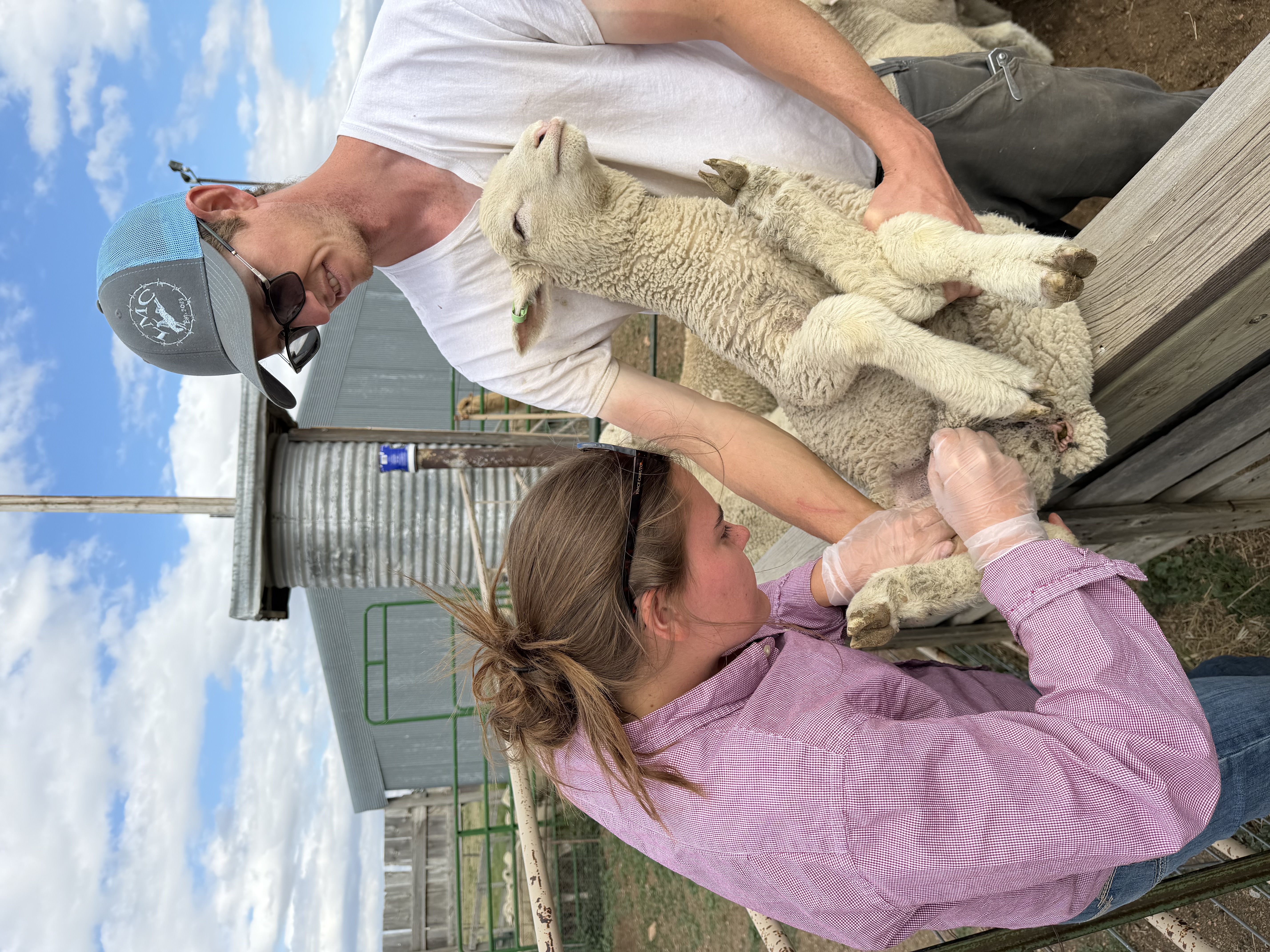
The most important lesson I have taken from this week is the value of persistence — of continuing to push yourself even when things do not go right on the first try. Every morning, I am responsible for leading a cow into a chute so that two calves can nurse from her. The first time I did this alone, I found it challenging, as I had never operated a chute or led a cow on a halter by myself. However, with each morning that passed, I improved. There were still small setbacks, but I kept reminding myself not to get discouraged. The same held true when I helped dock lambs for the first time. Picking up and holding squirming lambs in the right position was awkward at first, but with each lamb it became a little more natural. This week reinforced for me that growth in this field is built through repetition, patience, and a willingness to keep going even when things feel difficult.
I would not say I challenged much of what I was taught this week, as most of what I learned was new to me and I was focused on absorbing as much as possible. However, there was one situation that caused me to reflect differently than those around me. During docking, it appeared that a shot given to one of the lambs may have struck its spine, leaving it paralyzed on one side of the neck and unable to stand, eat, or drink. My host family chose to monitor the lamb over several days to see if it would recover, which I understand is a reasonable approach. That said, watching it struggle for three days before the decision was made to put it down was difficult for me. Given that it showed no signs of recovery and was visibly suffering without food or water, I felt the more humane decision might have been to put it down sooner. This experience opened up an honest internal dialogue about animal welfare, the lines between hope and suffering, and how experienced ranchers weigh those decisions differently than someone newer to this environment.
Most of the questions I have right now are practical ones that will likely be answered naturally as I continue working. For example, I am still curious about the most effective techniques for herding cattle on horseback, especially when calves break away from the herd. I also want to learn better strategies for bottle feeding a calf that refuses to take the bottle. Beyond the hands-on tasks, I find myself wondering more about the broader operations of the ranch — how grazing rotations are planned across seasons, how decisions about livestock health are made, and how ranches like this one balance profitability with land stewardship. These are questions I look forward to exploring through both observation and conversation with my hosts.
Going into next week, my goal is to take everything I have practiced this week and work on becoming more efficient and confident in each task. I want to move through my morning chores with greater speed and fewer hesitations, give better care to the calves during bottle feeding, and continue improving my comfort level around the livestock in general. I also plan to ask more questions intentionally, particularly around the reasoning behind certain ranching decisions, so that I am not just carrying out tasks but truly understanding the bigger picture. The experience of attending the stewardship award ranch and the Wyoming Agriculture in the Classroom meeting reminded me that agriculture extends well beyond daily chores, and I want to keep that broader perspective in mind as I grow throughout this internship.
Submitted by: Kaci Jericoff
Edits by: GrowinG Internship Team