Wheel Lines, Embryos, and Show Cattle
#bfrdpwy #aginternship #RightRisk
I can hardly believe that the first week of the internship is over! I have already seen so many new things that it’s hard to describe them all in a short summary.
First, I began learning about irrigation. By moving wheel pipe twice each day, I’ve learned how wheel pipe irrigation works, how to maintain it, and in the case that I don’t put the opener on correctly, how to brave the blasting water to shut off the valve. We also discussed plans for small-scale flood irrigation in certain areas and began digging trenches in preparation. In the coming weeks, I will be using my understanding of wheel lines to repair and reposition a broken wheel line.
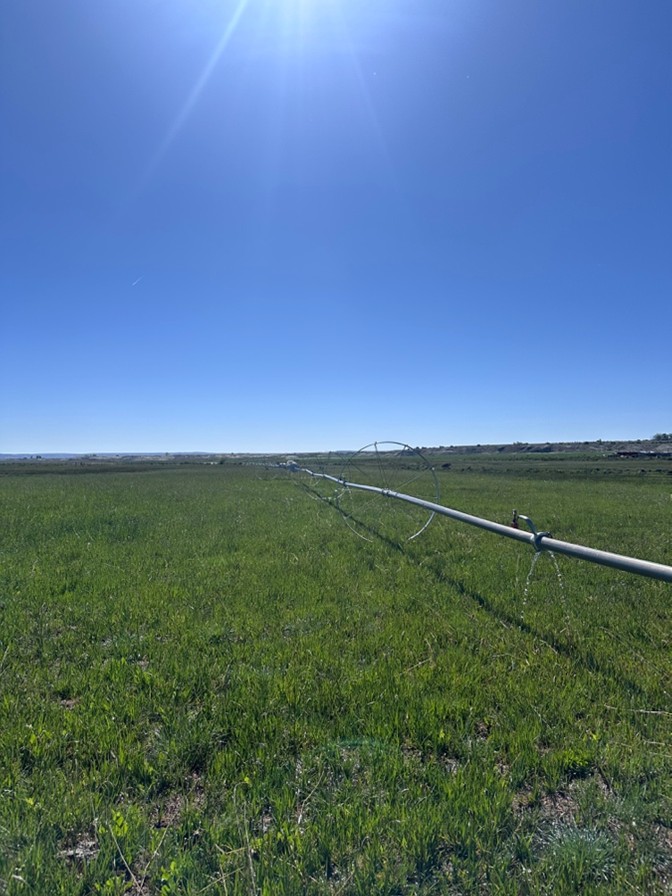
Currently, I would challenge the belief that flood irrigation is more effective than a sprinkler system, and I wonder if a half-pivot would be more consistent and less labor-intensive than the wheel lines, despite the higher initial cost. I am still curious how the water pump works, if it’s possible to adjust the flow rate, and how to control where flood irrigation flows so that it doesn’t wreak havoc.
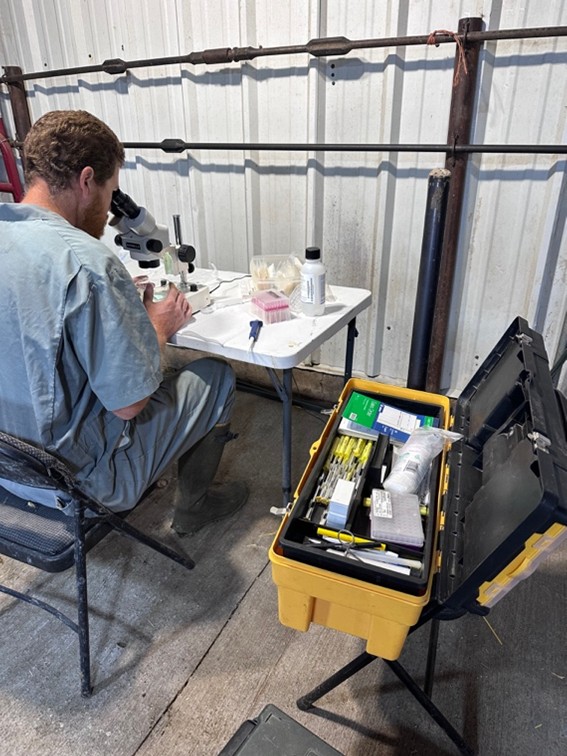
Later in the week, the embryologist came for a day. I learned about the process to super ovulate a cow and flush the embryos out; I even got to look through the microscope at the twelve tiny eggs. The embryologist also put frozen embryos in recipient cows. I heard much about the benefits and drawbacks of embryo transfers, IVF, and artificially inseminating cows. In the future, I want to know more about the selection process for donor cows and recips. I could potentially use what I learn about AI and embryo transfer to improve herd genetics at home.
That same day, the grain truck came to refill all the feed bags. I am also interested in learning what materials and amounts are in each feed ration, and how that is decided. Now that I know what to feed the animals each day, I plan to build knowledge on ration composition and to learn how to run the feed wagon.
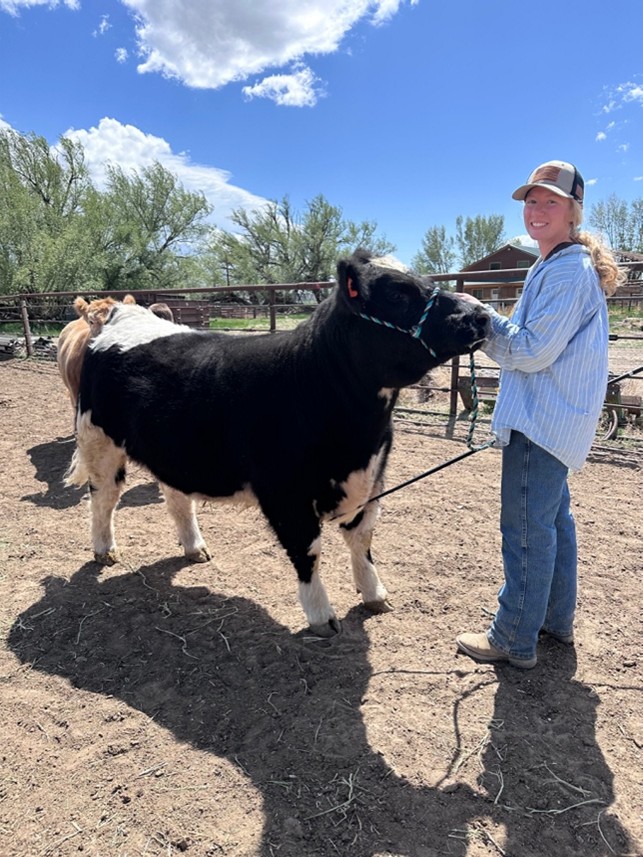
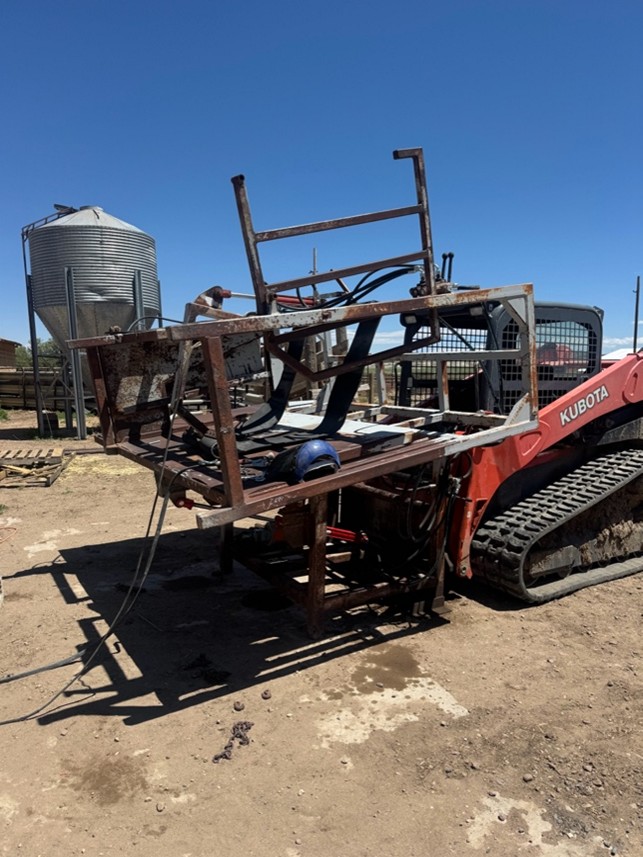
Another aspect of the ranch I experienced this week is showmanship. With two of the kids participating in the Maine-Anjou Chianina Junior National cattle show, we had to do a lot of work to get the show steer and heifer prepared. We modified a tilt table to run on skidsteer hydraulics and trimmed the calves’ hooves, washed and blow-dried the animals every day, and a professional fitter clipped their hair. Though I won’t be showing anything officially, I got the chance to practice showing “Sassy” the heifer along with the kids.
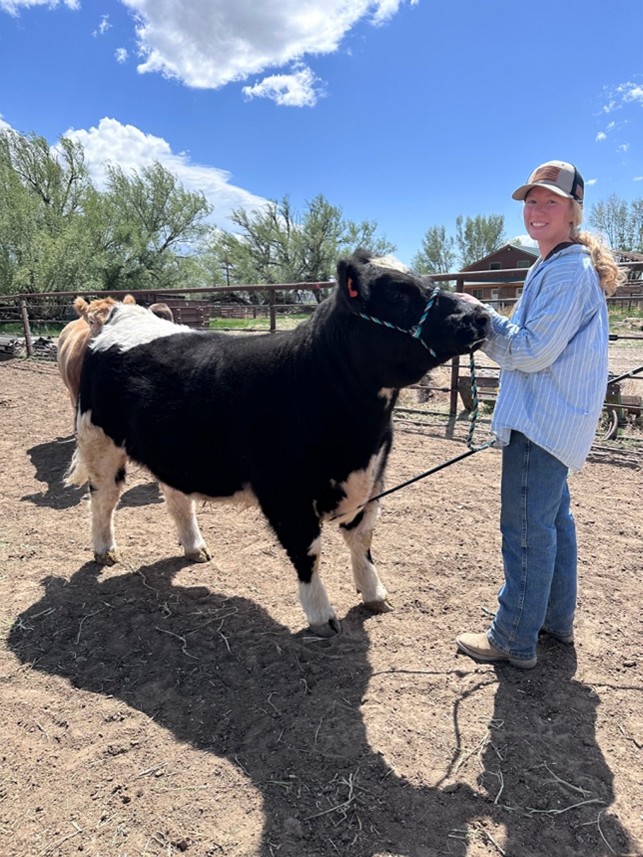
I find it interesting that no matter how broke the animal is, it is imperative that the handler exercises authority over the calf (whether said handler knows what she is doing or not). If the calf knows it can do whatever it wants, it will not cooperate. This was a good opportunity for me to learn about the rules and realities of showmanship.
On Friday, we left for the Maine-Anjou Chianina Junior Nationals. I’m hoping that I will get to learn more about cow handling, grooming, and judging during the week. Since we won’t get back until late Thursday, come back next week to read about the fluffy cow show!
Finally, the soft skill I’d like to highlight this week is adaptability. Anytime you start a new job you must adjust, but ranch work especially requires adaptability. Because of the nature of our work, I had to shift my lifestyle and eating schedules. When you can’t control your circumstances, it is important to adjust what you can control to be most effective and sustainable. This same principle applies to what we did throughout the day. Some days, an unexpected event happened—a calf broke out, the ATV broke down, the wheel line broke, etc. When this happened, other plans got put on hold. Stepping up to the challenge at hand meant using our labor and resources toward whatever was most important at the time. Learning how to best use my time and abilities for the task at hand is a skill that will serve me no matter the situation.
Submitted by: Anna Steinle
Edits by: GrowinG Internship Team