Tractors, Pipes, and the Big Picture
#bfrdpwy #aginternship #RightRisk
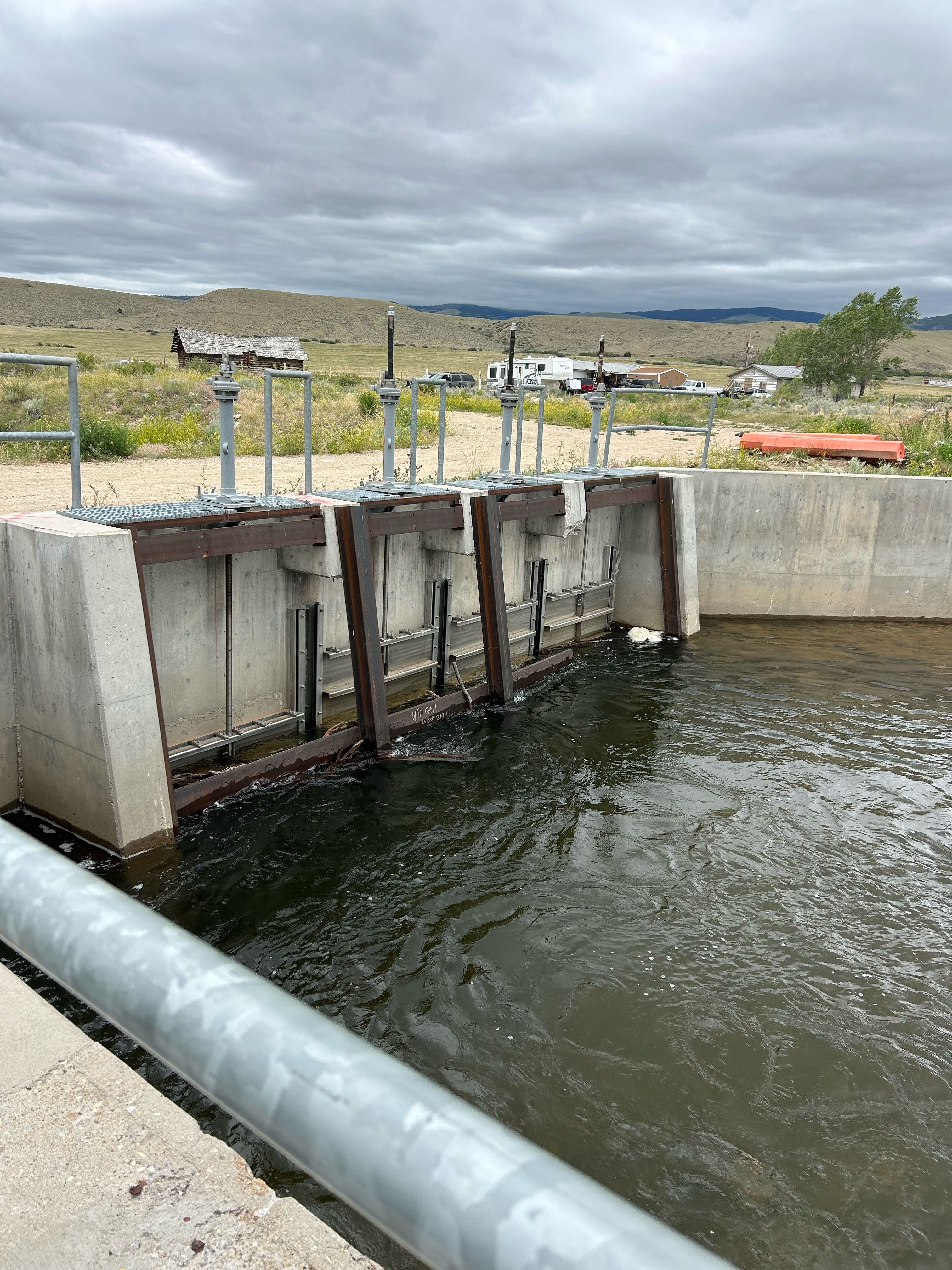
This week, I learned a lot about tractors as we approach the beginning of our haying season. Soon, we are going to begin cutting and baling our hay fields. In preparation for that, we are thoroughly spraying the leafy spurge and thistle so they pass weed inspection and can be taken up the mountain to be used as feed for the horses in the outfitting operation. Additionally, we went over the parts of each tractor, the mechanics of hydraulic machinery, and finding grease zerks in order to properly lubricate high friction points to reduce wear. My host also took us to the federal headgate of the Ray Canal to show us where the origin of some of our water supply is. Our other water supply is called the Reynolds Ditch and its origin is the Little Wind River (I believe) and we travelled to the headgate there and increased our water supply.
At one point this week, me and a few others moved some pipe in a field in hopes of achieving better water coverage. Unfortunately, due to this switch up not being properly communicated to everyone equally, nobody really knew where the water was and which gates were open. This resulted in a little water everywhere all across the field which isn’t really what you want when you’re irrigating. It’s better to douse smaller sections to make sure that everything gets adequate water to grow a lot rather than a little water over a larger section to grow a little.
The main thing that I would challenge from this particular experience is not the fact that we moved the pipe but how it was conveyed to the others. One of my coworkers is developing a mapping system to track each field and where the pipes and ditches are. This will allow each of us to mark in the system where and when we last individually moved the water and where it travelled to make for the most efficient watering system.
The main question I have is how do the ditchriders and the government decide who gets water and when? We have really poor water in one portion of our fields and the source is the Ray Canal. We travelled up to our headgate 76 which feeds that field and we saw that the water levels were really low which isn’t surprising due to the fact that our ranch is virtually the last stop on the Ray Canal.
We then travelled upstream to see where the rest of the water was going and noticed the farm above ours had a lot of boards damming the river to feed their ditches. However, they were ditchrider boards which means that we can’t move them since they are federal workers and that would be illegal. Essentially, the ditchriders decided that the water was going to be allocated to the other farm. What is the process for making that decision? Is there a certain criteria that determines when and how long you get water for? Who is the deciding voice?
This week, my host emphasized the importance of seeing the big picture. Yes, it is important to be detail oriented and to make sure that nothing gets left behind or forgotten. However, it is easy to get carried away in a small portion of the day to day activities and lose sight of the big picture or end goal. What is still needed to achieve the end goal? How can we best allocate our resources to efficiently move towards that end goal?
Submitted by: Kaylee Pearce
Edits by: GrowinG Internship Team