Working on Horsemanship
#bfrdpwy #aginternship #RightRisk
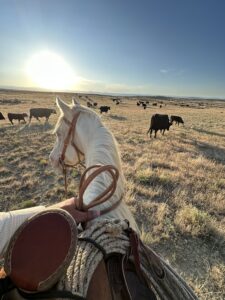
This week has been pretty heavy on trailing cows from the winter range to the summer range. The distances vary, but we are riding around 10-12 miles a day. It has been very fun and this is the type of work I truly enjoy. Along the way, I’ve been learning a lot about certain plants that cows prefer, different techniques on applying pressure with your horse in order to get cows to keep moving, and also tips on my horsemanship. I have been riding three different horses – two of them being the ranch’s horses and the third being my own colt. His name is Pecos, and he is learning a lot but still unpredictable. Teaching him to be confident in a new environment and terrain is also teaching me a lot about how a horse’s mind works and it’s quite rewarding.
It’s hard for me to think of something I’d challenge this week as I pretty much agree with everything I’ve been taught or have been doing from previous experience. The way these folks do things can seem foreign to me, but at the same time, I’m very green to this world and still have a lot to learn. So, I can’t really contest the way they do a lot of things.
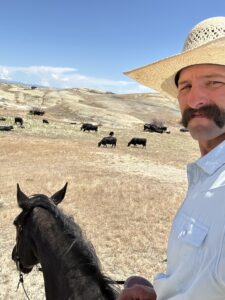
Some questions I now have are based on horsemanship. How do I get my colt to walk in a straight line and not have his whole body bent while walking at an awkward angle? This forces me to adjust my seat and feel off-balance, especially while going at faster speeds. It’s something I’ve noticed in other colts so is this something normal in young horses? Going from the snaffle bit to the short-shanked snaffle bit, what do I have to look for in the horse’s progression or ability in order to know that he is ready for that next bit?
What I plan to do with what I’ve learned this week is to put into practice some of the horsemanship cues and techniques on my colt. He is learning fast and I need to be consistent with his training. Also, I will be putting into practice some of the pressure applying techniques on moving cattle through tough areas like hill tops where they can spread out at the top or through pinch points where they don’t want to move through.
Submitted by: Victor Standke
Edits by: GrowinG Internship Team