
The Ins and Outs of Haying
#bfrdpwy #aginternship #RightRisk
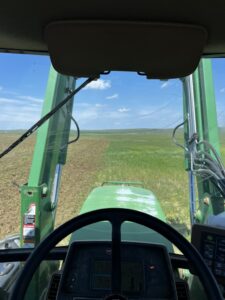
This past week, I began learning the early stages of the haying process, specifically focusing on discing and swathing. Discing was one of the first steps, and I quickly realized how critical it is for preparing the field for a healthy, even hay crop. I learned how the disc breaks up the soil, controls weeds, and helps old plant material decompose, creating a clean and loose seedbed. Operating the tractor while pulling the disc required precision and patience as driving too fast or unevenly could lead to rough patches and missed areas, which would ultimately affect the uniformity of the field and future hay yield. It gave me a new appreciation for the groundwork that goes into haying before a single blade of grass is cut. Swathing came next, and this was my first time operating a swather. I learned how crop height, moisture, and density are judged in order to make decisions about where and when to swath. Cutting too early can reduce nutritional value, while cutting too late can lead to dry, brittle hay that’s less appealing to livestock. I also had to pay attention to how evenly the windrows were laid out, since that affects drying and later stages of baling. Though we haven’t baled or stacked yet, I now understand how the success of those later stages starts with how well the field is prepared and how neatly and efficiently the hay is swathed.
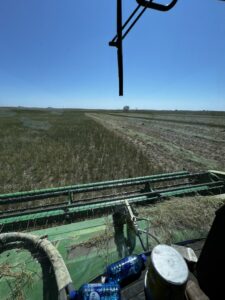
One concept I found myself questioning this week was how the timing of haying is decided. I understand that routine and experience guide a lot of ranch work, but I also saw firsthand how swathing on a day with higher humidity slowed down the drying process and introduced the risk of uneven curing. I believe that with better use of weather data and moisture readings, the swathing process could be made more efficient and result in higher-quality hay. I also noticed that when we disc fields, there seems to be less attention paid to adjusting depth or spacing between passes based on soil type or moisture content. While consistency is important, the land isn’t uniform, and I wonder if being more adaptable in our discing strategy would improve field conditions. I’d like to better understand how soil structure, previous plant growth, and weather history affect how we should disc.
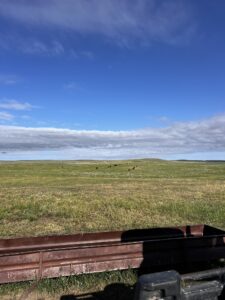
As I wrap up my first week of learning how to hay, I still have several questions. I’m curious about the ideal moisture level for cutting and how it is gauged in the field without tools. I’d also like to learn more about the optimal timing for each phase of haying. I also wonder how different forage types or field locations change the approach to discing and swathing. Does every crop respond the same way to timing and technique, or do we need to adjust depending on the end-use, whether it be for cattle, sheep, or storage? I’m also interested in how other regions or operations approach the early stages of haying. For example, where I’m from in Nebraska, the fields are irrigated heavily and receive lots of rain, leading to a more dense and packed hay field, compared to the fields I’ve been working on, where the hay growth relies heavily on rainfall. I want to understand the “why” behind each choice so I can become more thoughtful and intentional in how I approach this process moving forward.
Going forward, I plan to keep asking questions, observing closely, and building confidence with the equipment. I want to become more efficient and skilled at discing and swathing because I now realize how foundational these steps are to the entire haying operation. Even though baling and stacking are still ahead, I know that their success will depend heavily on how well the field is prepared and how carefully the hay is cut and laid down. I also want to begin researching more about field management and forage nutrition, so I can make sense of how our daily work affects livestock health down the road.
Submitted by: Sydney Farley
Edits by: GrowinG Internship Team