

Time With Parliamentary Procedure at WSGA Convention
#bfrdpwy #aginternship #RightRisk
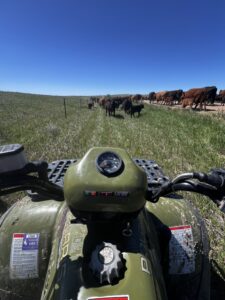
I attended the Wyoming Stock Growers Association summer convention in Laramie this week. The convention took place Monday through Wednesday of this week, and throughout my time at the conference, I met many new people and learned a lot of new information about the Wyoming Stock Growers and their purpose. One of the hardest concepts for me to understand throughout the conference was all the different associations and boards and how they all relate to each other. The Wyoming Stock Growers, National Cattlemen’s Beef Association, American National Cattlewomen, and Cattlemen’s Beef Board were all represented at the conference. I understood that the Stock Growers hosts the conference to pursue its mission of advocacy and aid in lobbying at both the state and national levels right here in Wyoming.
To vote in the committee meetings held during the WSGA convention, you must be a producer member of the WSGA, meaning that you must have at least 1 head of cattle. The producer members that can vote range from having 1 to over 500 head of cattle, which I feel offers very diverse and different points of view regarding the topics discussed in the committee meetings where voting takes place. I attended a marketing committee meeting in which a chairwoman from the Beef Checkoff was present. The greatest discussion point throughout the meeting was increasing the $1 per head that is collected by the Beef Checkoff every time cattle are sold. The members in the room came to a consensus that the price should be raised in order to support the Beef Checkoff; however, figuring out by how much it should be increased was not as simple.
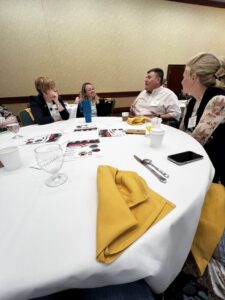
Throughout the delegation between members, I became very familiar with parliamentary procedure and the terms associated with it. A motion would be made by someone, another person would usually second this motion, the motion then becomes open for debate, the motion is then voted on, and based on how the vote turns out, the motion will either be amended or appealed. This parliamentary procedure helps keep the conversation and discussion organized and easy to record; however, it can be confusing after a long period of time. The room had the same idea in mind, and after 2 hours of debating and delegating with many new motions and amendments, they were finally able to come to a consensus on the precise wording they deemed fit. Deciding upon the wording of the new order was a very important part of the proposal, as there was so much information that needed to be fit into one clear and concise sentence for it to be specific and direct in illustrating its point when it is proposed to the larger board for further voting.
While sitting in and observing the marketing committee meeting, I began to come up with questions and concepts that were discussed that I didn’t fully understand. The main concept I would challenge is the institution of a set amount collected by the Beef Checkoff per head of cattle sold. Most other checkoffs use a calculation, or a percentage of what is sold, to collect their funds. The Beef Checkoff has been collecting $1 per head since 1985. $1 in 1985 is worth $0.33 in 2025, which means that the Beef Checkoff is now only getting about a third of the funds compared to what they were collecting 40 years ago. However, using a fixed amount per head will just continue this issue, leaving both producers and checkoff members unhappy. For the checkoff to adequately collect funds without having to worry about inflation, it would make more sense for them to adopt a similar system to the pork checkoff, which collects 4% of each pig sold. Having a fixed percentage allows for the cost taken off per head to adjust with the market as well, so a low-priced head of cattle would pay less than a high-priced head of cattle, allowing for all the prices to be relative to what is sold.
After the committee meeting was over, I approached Ann Wittmann, the executive director of the beef council, and asked her about the questions that the meeting had raised for me. She answered my question about imposing a fixed percentage per head and explained that using a percentage system requires a lot more math than a fixed rate, which therefore requires more work to be done by people and isn’t as cost-effective as a flat rate. This answer didn’t really make sense to me because if a percentage brings in more money, then there would be more money to pay someone to do the calculations.
With the knowledge I’ve learned this past week, I plan on looking into more of the legislative side of cattle marketing and regulations. I was really interested in the Beef Checkoff and how it works, as it is unique compared to the other checkoff boards because it has more local control and regulation. This conference showed me the importance of producers having a voice in the laws that affect them directly. In the future, I want to be proactive in keeping up with state and federal regulations that affect ranching operations, especially those involving environmental compliance and grazing allotments.
Submitted by: Sydney Farley
Edits by: GrowinG Internship Team