Jumping Into All Things Lambs
#bfrdpwy #aginternship #RightRisk
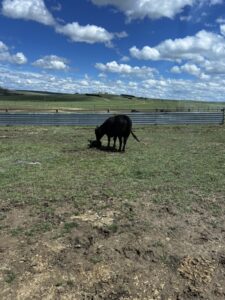
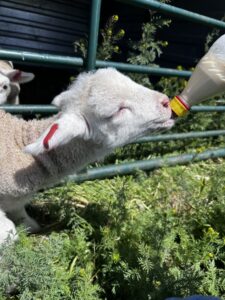
During my first week on the ranch, I very quickly learned just how much work goes into running an operation of this scale. There is always something to do on the ranch, from feeding bum lambs to installing new fence. Not every job is always “fun”, but they are all necessary, little tasks that help keep the ranch running.
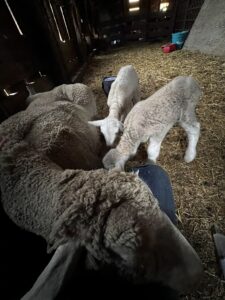
On the first work day, it started snowing, so there wasn’t much to do, as you can’t really do much with poor weather. I learned that with the snow comes the possibility and likelihood of dead lambs, as they are lambing in poor conditions and usually unable to keep the lambs warm enough after birth if it is snowing. This is unlike cows, who typically calve in the early spring and are better equipped to handle bad weather. I was familiar with cow-calf operations and how they worked going into this week, but I was wildly unfamiliar with sheep operations of any sort prior to this week. I feel like over this past week, I have gained a much better understanding of how this sheep herd is managed. I learned that sheep grazing is able to be utilized in order to control plant and grass growth in areas. The sheep are moved around from pasture to pasture to cycle through what they graze during different seasons of the year. I also learned that sheep do not have motherly instincts as strong as cows. For example, if there is a disruption, like sorting cows and calves, the cows will usually stay with their calf or try to find them. With sheep, if there is a similar disruption, a ewe will most likely not attempt to locate her lambs and leave them. Knowing and understanding the difference in this behavior is very important, as interacting with the ewe and lamb herd constantly can significantly disrupt them and cause a much higher fatality rate in that herd.
One concept I would challenge is deciding when the most appropriate time to lamb is. If it is known that the weather in this area will most likely be poor until around mid-June, what is the reason for lambing in late spring/early summer? I also wonder the same thing about the calving schedule, as calving usually occurs during early spring in March and April, and this ranch calves in April and May. Another concept I would challenge is the grazing rotation
currently set in place. Moving sheep from one pasture to another helps prevent overgrazing and manage grass growth, but I wonder if there could be improvements made to this grazing rotation by incorporating more real-time monitoring of the forage conditions in the pastures. Sheep also tend to graze closer to the ground than cattle, and this can create a risk of plants being damaged and not being able to regrow properly. This made me wonder about how grazing intensity is monitored and measured alongside grazing duration, and if the pastures are given a proper rest
period between rotations.
 #bfrdpwy #aginternship #RightRisk
Throughout this week, I have had many questions regarding lambing schedules and grazing management. Are there economic or logistical reasons behind the current lambing schedule? What are alternative systems that can reduce mortality? What happens if you lamb too late in the season? What happens if you calve too late in the season, and why do we have a later calving schedule here? How can lamb survival be increased, and what are the benefits and
downsides to this? Why are the ewes separated from the rams after they are pregnant? In grazing sheep, how are nutrients supplemented? Why does each group of animals receive different amounts and kinds of feed? What effect does pasture grazing have on other feed (ie grain) that the animals are fed? How do sheep choose what to graze, and how does this influence what grows in the pasture over time? How are rotational grazing decisions made (based on calendar dates, forage height, animal conditions)? What is the difference in grazing patterns between sheep and cattle and how does this affect the pastures that they are in? Can you move sheep into a cattle pasture? Lastly, what are the benefits and downsides to having a multi-species grazing operation?
With the information that I’ve learned this past week and the questions that I have come up with, given that information, I plan on asking my hosts more about the pasture and animal management strategies that they have in place. Specifically, why they choose to lamb and calve when they do. Throughout this week, I plan on focusing on and observing the different grazing patterns in cattle and sheep, and making note of which plants cattle tend to graze as opposed to the sheep. I want to ask more questions about the grazing rotations and what determines them. I believe that understanding the relationship between the grazing habits of both sheep and cattle and pasture health will help me further understand how the land is utilized, whether it is efficient or not. I also hope to observe animal nutrition more closely throughout this next week and notice how animal diets differ between the different animals in their different pastures (heifer calves, cow-calf pairs, yearlings, ewes, and rams). Ultimately, I hope to better understand how grazing systems support animal nutrition and productivity, as well as pasture health and ecosystem sustainability on mixed livestock operations.
Submitted by: Sydney Farley
Edits by: GrowinG Internship Team