
Learning All About Docking Lambs
#bfrdpwy #aginternship #RightRisk
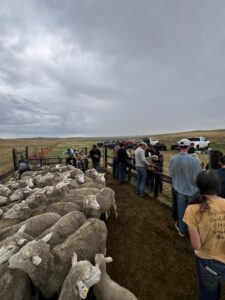
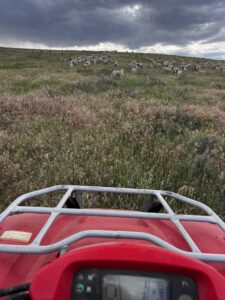
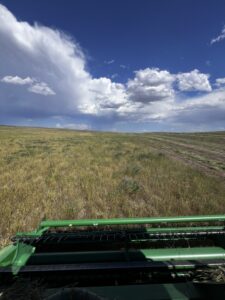
During the first half of this week, I spent a good amount of time in the hay fields. I learned how to run the swather and finished cutting hay in three large fields. I was also shown how to run the tractor pulling the rakes and finished raking the field that I cut. Over the past few weeks, I’ve been learned the steps necessary to produce hay, from picking rocks to baling. Now that we are finally cutting and baling, all the steps are beginning to come together, and the importance of each step is becoming prevalent. The latter half of the week was spent gathering sheep and docking. The pasture where the sheep are held is large and composed of rough terrain. This means that gathering is no easy feat and requires immense communication, which, at times, can be a little hard. When gathering, we split the pasture in half and took the sheep on one side to one pen, and the sheep on the other side to another pen. Once the ewes and lambs were all gathered in a pen, we then moved them into a smaller pen, and worked through the lambs group by group. We would typically fit around 60 lambs per group, with around 1000 lambs per pen. With everyone helping, the docking process took about 5 hours per day, for the two days that we were docking. We ended up docking around 2,000 lambs, which was no easy task; however, it was fulfilling to accomplish.
The main concept from this week that I would challenge is the efficiency of lamb docking. Docking is important as it is more than just banding the tails and vaccinating, but also allows time for each lamb to be checked for any health issues, or more often, helps identify the bum lambs. However, picking up 2,000 lambs is extremely labor and time-intensive. When branding calves, there are many ways to do so. Roping and dragging is the fun, “traditional” way that involves more time and labor, while a calf table is more efficient and easier to use with a smaller crew. Picking up each lamb reminded me of roping calves when branding, as everyone was constantly picking up lambs and bringing them to the table. This made me wonder if there are any alternative methods to docking, maybe with a similar mechanism to a calf table. I was also curious as to why the operation that I’m on decides to band the sheep’s tails as opposed to cutting them. Do the pros outweigh the cons of using bands for tails and castration?
I have quite a few questions that I aim to answer this week regarding the work I’ve done in the past week. What determines the length of the tail that is left on the sheep? How does docking impact the health of the animal? Does the stress from handling negatively affect animal health? At what age should lambs be docked? How does moisture and humidity affect the round bales that are produced? What are the ideal moisture and weather conditions for baling hay? What is the ideal weather for cutting hay? What happens if the hay is too dry when it is cut and baled? What happens if it is too wet? Does leaving the hay to sit in the sun affect its nutritional quality? Is it more cost-effective to produce your own hay as opposed to buying hay from larger operations?
With the information that I’ve learned this past week, I’ve realized how important it is to not just do the work, but to understand the reasoning behind it. I want to pay closer attention to how each step affects the overall outcome, whether that’s the quality of the hay or the health of the sheep. Now that I’ve seen how much physical effort and timing go into both haying and docking, I understand the importance of efficient and intentional work. In conclusion, I learned this week that haying and docking both take a lot of work and careful attention. Every step matters, whether you’re cutting hay or handling lambs. It can be tiring and take a long time, but in the end, the hard work pays off. You get good hay, healthy animals, and the satisfaction of knowing you did things the right way.
Submitted by: Sydney Farley
Edits by: GrowinG Internship Team