A Thank You to Customers
#bfrdpwy #aginternship #RightRisk
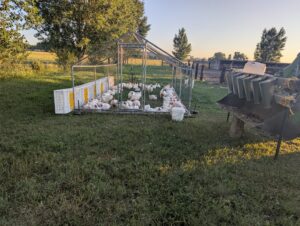
This week has been very busy with many things happening and tasks that had to be done. Irrigation started again this week, a bbq pit had to be built for roasting a lamb for a party, a bull had to be rented, the second set of meat chicks were put out to pasture, and half of the first set of meat chickens were processed.
My host has been hosting an annual farm party for the past few years. It started as a way to say thank you to customers who are major purchasers of the meat he sells. It also allowed the customers to see the farm and how the animals lived, what the conditions are like, and gives my host a chance to get to know those customers better. I was told that building a personal relationship with recurring customers is a huge part of building a customer base. I hadn’t thought of building personal relationships with customers as important because so many of the transactions I have are impersonal. One of the finished lambs from the flock was slaughtered a few days before the party to provide meat for the guests. This loss is planned every year so that it doesn’t affect their bottom line. I found this a very interesting and unique way to attract and retain customers.
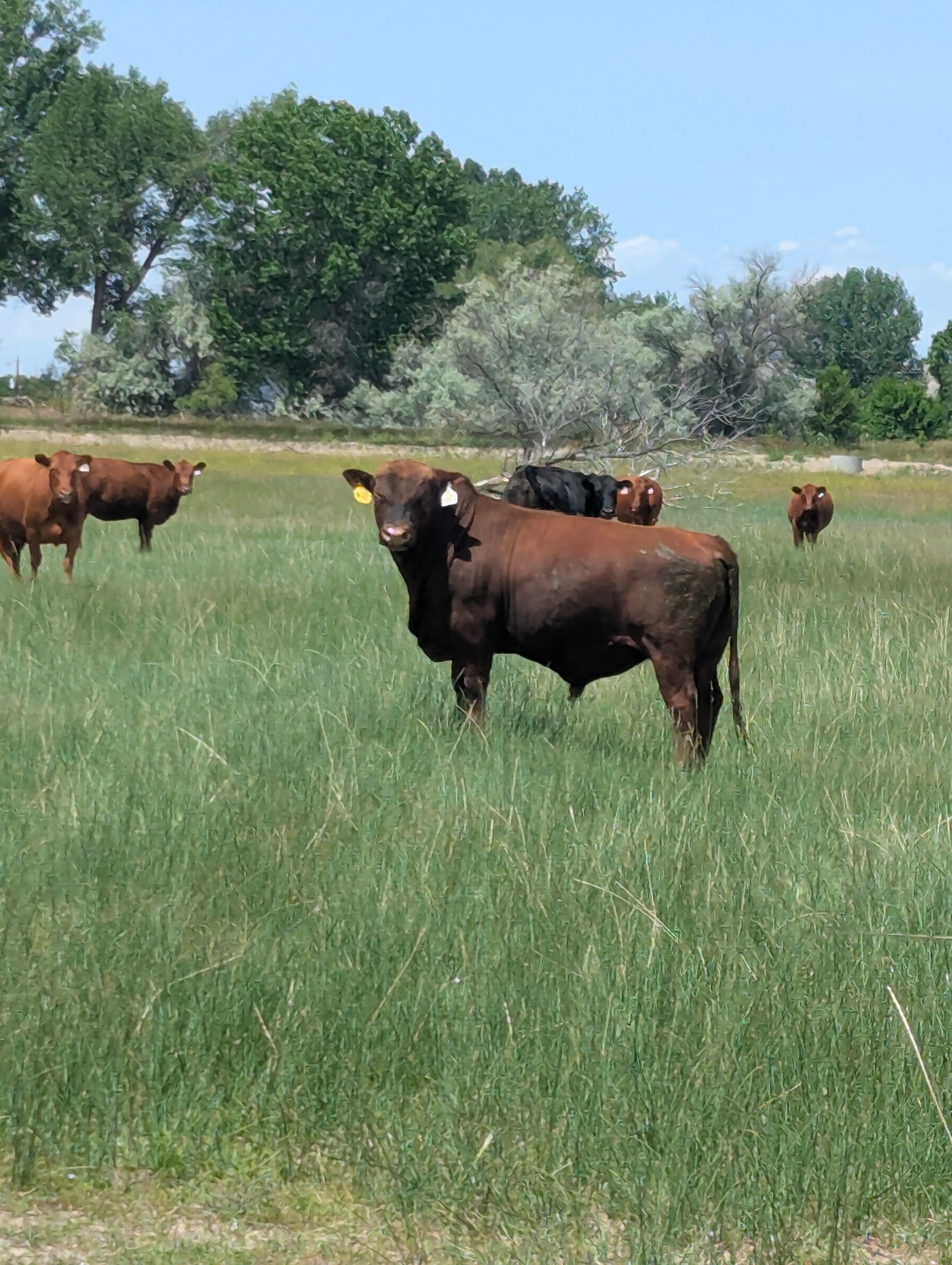
A bull is rented each year so that there doesn’t need to be multiple cow herds. The requirements for the bull that my host wants are short legs, gentle with cows and calves (because the calves are not his offspring), and lets the cows get to know him before he starts trying to mate. The bull that we picked up Wednesday displayed all of these qualities when we put him in the field with the cows. The bull goes in now so that the earliest calves will be born in the beginning of April. He will stay in with them for three to four heat cycles before going back to his farm to make sure all of the cows have been bred. Those that don’t have calves the following spring are culled.
The cows have been showing they were in heat these past couple weeks which means they are ready to be bred again. My host doesn’t look for any other conditions before putting a bull in with them. The calves that are with the cows will not be weaned off until September. I learned that when it is weaning time, the cows will go into one pasture and the calves in a pasture that is across a dirt road and closer to the farm. The calves cannot get to their mothers, but they can still see and smell them. My host stated that the calves only cry for a day or two before adjusting to being away from their moms.
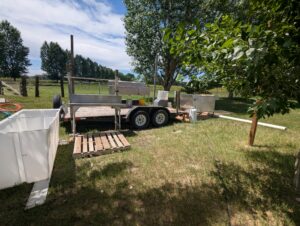
Chicken processing took place on Sunday. On Saturday, we got the equipment out and set up. Processing takes place outside; my host hasn’t built a facility for processing to be done indoors yet. The chickens that were going to be processed were pulled from pasture and put into a large cage close to the processing equipment the night before. Volunteers that my host knows come out Sunday morning and work the different stations to help get the chickens ready for sale. One station scalds and plucks; another removes necks, crops, and feet; and the final station removes all of the intestines. My host is in charge of killing the chickens. There are buckets of ice water between each station that the chickens are placed in to help start the cooling process.
I worked on the last station. The goal was to get all of the organs out in one pull because that was the quickest and most efficient way to gut the chickens and if my station was too slow, then the entire assembly line would slow down. I found it fairly easy, but trying to pull out the lungs with the rest of the organs was the hardest part because they are sunk down lower than the rest and are very squishy. We processed 90 chickens Sunday, and my host had buyers for all of them come and pick them up that afternoon, after the chickens had been weighed, checked for quality control, and packaged. I also found this to be a unique way of marketing, because it gives customers a chance to come out to the farm, and they have a bird that they know was killed that morning.
A concept that I would challenge this week would be using cows with long legs in a grass finishing program. My host finishes all of his cows on grass. There are a few cows that have longer legs and those take much longer to finish out than those with shorter legs. Since the cows have to be processed by a certain time in order for the farm to make money, the longer finishing time is not profitable when grass finishing. It also means that these cows have to be fed through the winter, when feed supplies are the lowest. This causes another loss for the farm, as that feed could have been used to feed a pregnant cow that is part of the breeding herd instead of one that will be going to slaughter in a couple of months.
After completing this week, some questions that I still have are: will having a pasture between cows and calves during weaning have the same low stress effect as a road or will the distance be too far? When culling a cow that didn’t have a calf, does it go to the sale barn if it is younger than five or is it better to send it to slaughter? To what temperature are the chickens cooled to? Why are chickens dunked multiple times in the scalding water instead of submerged for a set amount time?
This week has been very busy and I have learned so much. I will definitely use what I learned about breeding and weaning in the future. Chicken processing was cool and I had fun doing it. What I learned from that experience I will probably keep for if I end up processing my own chickens. The marketing concepts from this week are different from others that I have seen and heard of. I will see if I can implement my own version of them for my ranch in the future.
Submitted by: Anna Agee
Edits by: GrowinG Internship Team