
They Say, Practice Makes Perfect
#bfrdpwy #aginternship #RightRisk
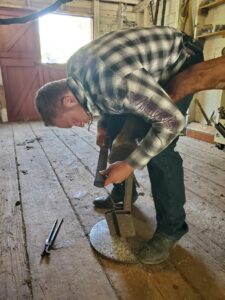
The week started out with a lot of practice of the skills I’ve developed over the last month: Monday consisted of tagging calves (a task slowly being edged out by doctoring as the calving season comes to a close) and mowing, but I had the opportunity to put the front shoes on a mare that had lost hers from start to finish — practice I eagerly approached and found extraordinarily gratifying.
Tuesday was more mowing, but I also had my introduction to pivot systems—John and I walked the pivot to find any plugged sprinklers and turned it on for the first time this season. I learned that pivots are ideal for irrigation, as they’re relatively low maintenance, but as a byproduct of their rotational movement, require a large area to be truly effective.
Wednesday and Friday found me on the fence line — we’re getting ready to move pastures again, and it’s best to be a couple pastures ahead, so I spent a sizable amount of time this week making that head start a reality. Slowly, the muscle memory is returning and I’m getting quicker at it — I should be pretty quick at the task by the time I have to go back to school.
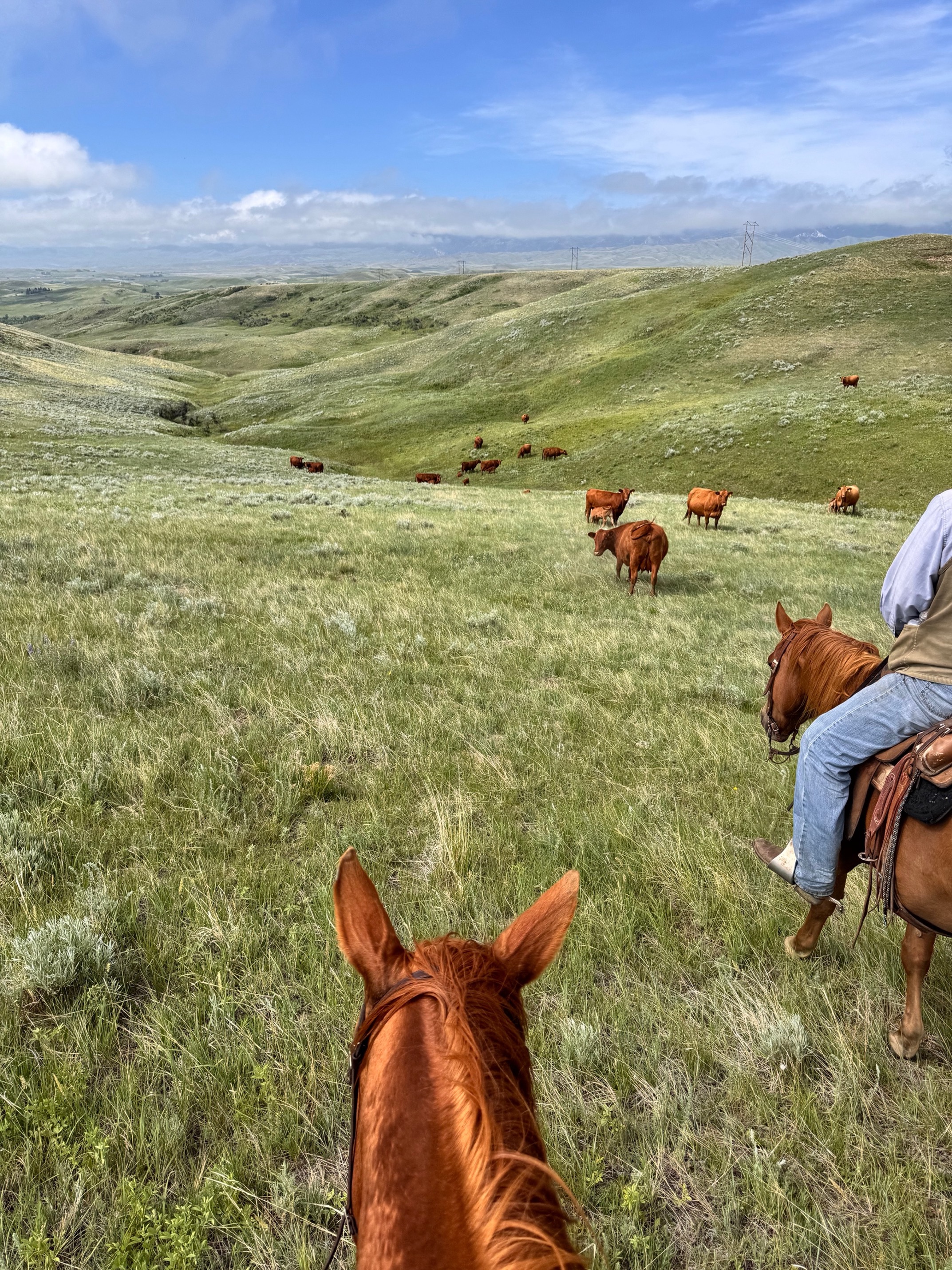
Taking a step back, Thursday found us tagging calves again, accompanied by a little bit of fencing and building a gate to replace one that had been damaged by a tractor last year.
Saturday morning, John and I went back to the hay field to turn on the side roller for the first time this season. Side rollers, like pivots, are great for irrigation. Side rollers, unlike pivots, are significantly more manual. Where you can set pivots to move at a certain rate and make them change direction automatically, side rollers must be moved by an operator every so often. As such, you have to constantly manipulate the line to water the whole field—something that can be somewhat intensive, depending on what wants to break that day.
The big take-aways for the week are that practice is a necessity; roping, fencing, mowing, and riding are like running—don’t do them for long enough, and you’ll lose a sizable amount of skill at it. True, they differ some in the lifespan of the unpracticed skill (running requires three weeks off before seeing dramatic loss in ability, whereas roping, I’m finding, might take only a couple days). Secondly, irrigation is something that should be given a lot of thought. Where you place your hay fields has tons of factors, from soil productivity to space to how well one could operate machinery on that ground, but for irrigation, flat, large spaces are best—pivots where possible, side rollers where necessary.
Submitted by: Leigh Stockton
Edits by: GrowinG Internship Team