
A Peek into Farming and Fences
#bfrdpwy #aginternship #RightRisk
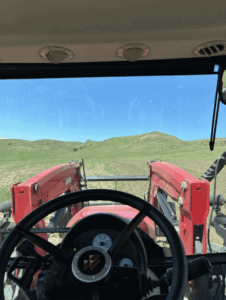
This week, as the first week of my internship, I received a great introduction into the farming side of this operation. Being late Spring, it is time to plant triticale for this operation, and I got plenty of time on all the equipment to get more experience with discing, rolling and packing (or field machining), and then finally seeding. It was interesting to see how different the practices are in rougher terrain as opposed to typical flat farming operations. Additionally, learning the changes in seeding practice and plant choice over the years to try and achieve the best growth. I also learned how crucial planting in the correct weather is, how a heavy rain during or right after planting can be very detrimental to your crop but a light rain the day after is optimal.
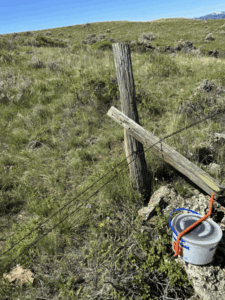
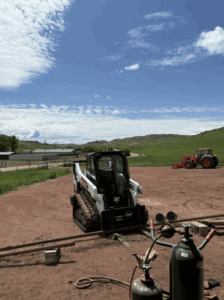
In addition to farming, the main priorities have been fixing fence around the property, and preparing for fencing projects later in the summer. Out on the further reaches of the property, the fencing is all barbed wire on wood or T-posts, in order to service these fences many times it is necessary to hike through the mountains and carry all of your supplies when vehicles cannot reach it. When there are many miles of fence and limited workers available for years there will be many faults in the fence like the picture I have included. For the pipe fence in the sorting and calving areas, I have been operating a cutting torch to cut pipe to desired lengths in order to be placed and welded to build new pens.
The major points that I have learned over the past week have been how much preparation goes into every major project or step in the ranching and farming side, as well as how time consuming the preparation for these operations can be. For example, in order for the correct planting of one of our fields, multiple tractors with multiple attachments are required as well as the hours of operating time and cost that come with it. I learned this first hand after spending a few days just preparing fields to be planted.
One concept that I would challenge is spending numerous hours walking or riding fence and replacing problem areas year after year. Instead of systematically replacing entire fence lines in order to increase the quality and dependability of the fence as a whole. Repairing only the areas that are failing when the section of fence as a whole is of poor quality is just setting yourself up for more work in the future instead of doing it right the first time.
One question that I still have is what drives the selection of the layout of an operations fencing for their sorting, branding and shipping areas? Almost every operation I have been on does it slightly differently and I am always interested as to why they have their outfit laid out that way and many times wonder why it is not optimized frequently to the needs or capabilities of the operation.
I plan on using what I’ve learned this week to improve my planning in the future for projects on operations I work down the road. It was very helpful to get the practice of going through how to properly plan for each step of a project that you are starting on especially when it comes to materials or time needed.
Submitted by: Colby Barker
Edits by: GrowinG Internship Team