A Multi-Operation Experience
#bfrdpwy #aginternship #RightRisk
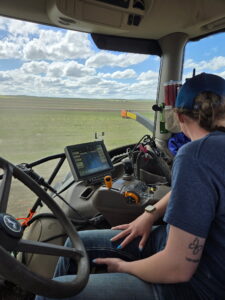
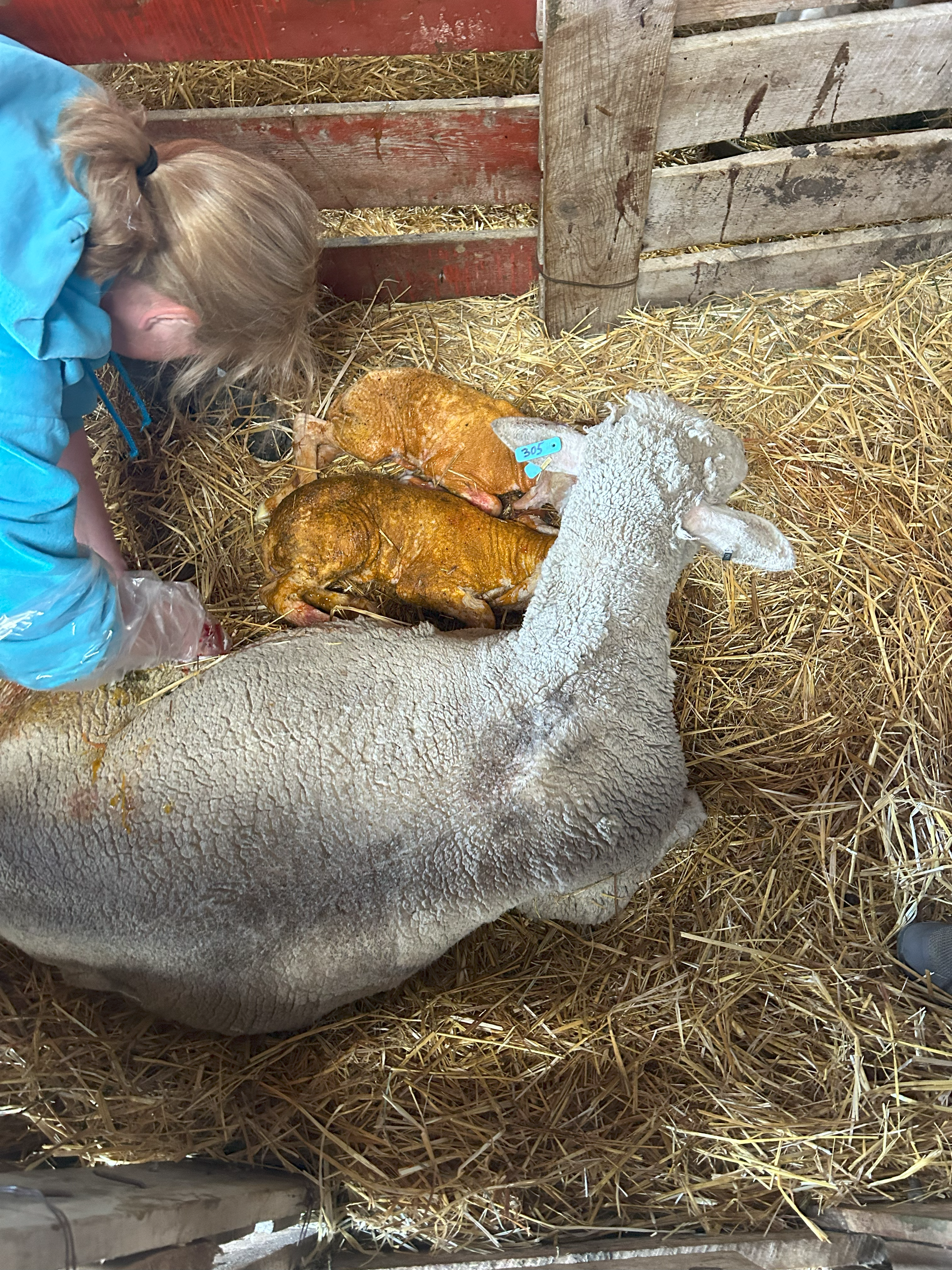
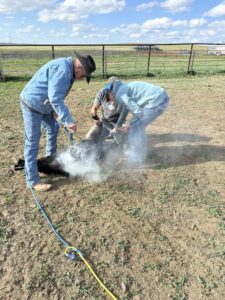
Over the first week of this internship, I have learned a lot. First, I learned about how each of the operation that the host family owns run and how they choose to calve and lamb. I also learned how to drive a tractor which is a big part of the day to day in every operation. I also learned about the different crops that they choose to farm. Most of the crops the family chooses to farm are crops that can be turned into hay. I learned about the different ways that they choose to calve, one being to calve up by the barn where you can watch them closer and the other being pasture calving where you don’t watch over them as much. I also learned about taking care of bum lambs and sick ewes, learning how to care for sick animals is also a big part of ranching which I feel like is very important. I also got to go to my hosts’ daughter’s house to brand calves and got to see how they like to brand. Next week I get to see how my hosts brand, I’m excited to see the different ways that they choose to do the different things in their operations.
I would challenge the concepts of being involved in the calving and lambing. Interning here, I have seen how they calve at the ranch where I’m an intern and also helping at their second operation I have gotten to see two very different ways of calving and lambing. On their personal operation, they calve out in the pasture’s and aren’t involved a whole lot. They’ll check cows every few days, but are not looking at them all the time; whereas at the other operation, they check their cows multiple times a day and have their heifers where they can see them easily. I think that I would challenge how second operation does their calving because it costs more labor and feed. When you calve in a big pasture as long as you have enough grass there it isn’t much of a reason to supplement feed as long as you don’t need to and there also, pasture calving also allows you to not have to spend the money on the labor that it takes to be more involved in calving. I think that as long as you have good pastures that can support your herd it is better to pasture calve but it also depends on the operation and the area that you are in.
Some question I still have been about books and how they work with the operation as well as what extra costs that they may have. I think that I can probably have these questions answered over the next nine weeks of the internship. I will most likely ask if I can sit down with them when they do their books and try and watch and ask questions on how they do them and what their costs are. I also have questions about how they choose to run their day-to-day operations. I have questions about how they choose to lamb and calve and why they choose those ways. I also wonder if they choose to do it differently in the past or if they’ve kept some of the same over the years. I also have questions about how they choose to pasture their cows and how they move.
I plan to use what I’ve learned over the past week in operations that I might work in or possibly in my own operation one day. I think that being able to use multiple calving methods or to be able to switch between them depending on what fits my operation that year. I also think that learning how to drive the tractor can help me a lot in the future. Using a tractor is a big part of a lot of operations and during certain time of the year can be used nearly every day. I also think that learning about the land and how the amount of rain each year and other conditions. This is important because it is one of the biggest things that can change from year to year. The weather is one of the biggest things that affects an operation.
Submitted by: Chelsea Finch
Edits by: GrowinG Internship Team